
5 benefits of co-ownership you don’t expect
Reading time: about 10 minutes
Two cruising areas instead of one, a boat that gets used, and someone who can do what you can’t: few people think of that when they first hear about sharing a boat. Most think of the money. Of course, if you buy a quarter of a boat, you pay a quarter of the purchase price and a quarter of the running costs. That is a good argument, and yes, I share boats for the money too.
For years I have shared two motorboats, one in Croatia and one on the Rhine. What has convinced me most along the way are the other benefits, the ones you do not see at first glance.
Here are five of them.
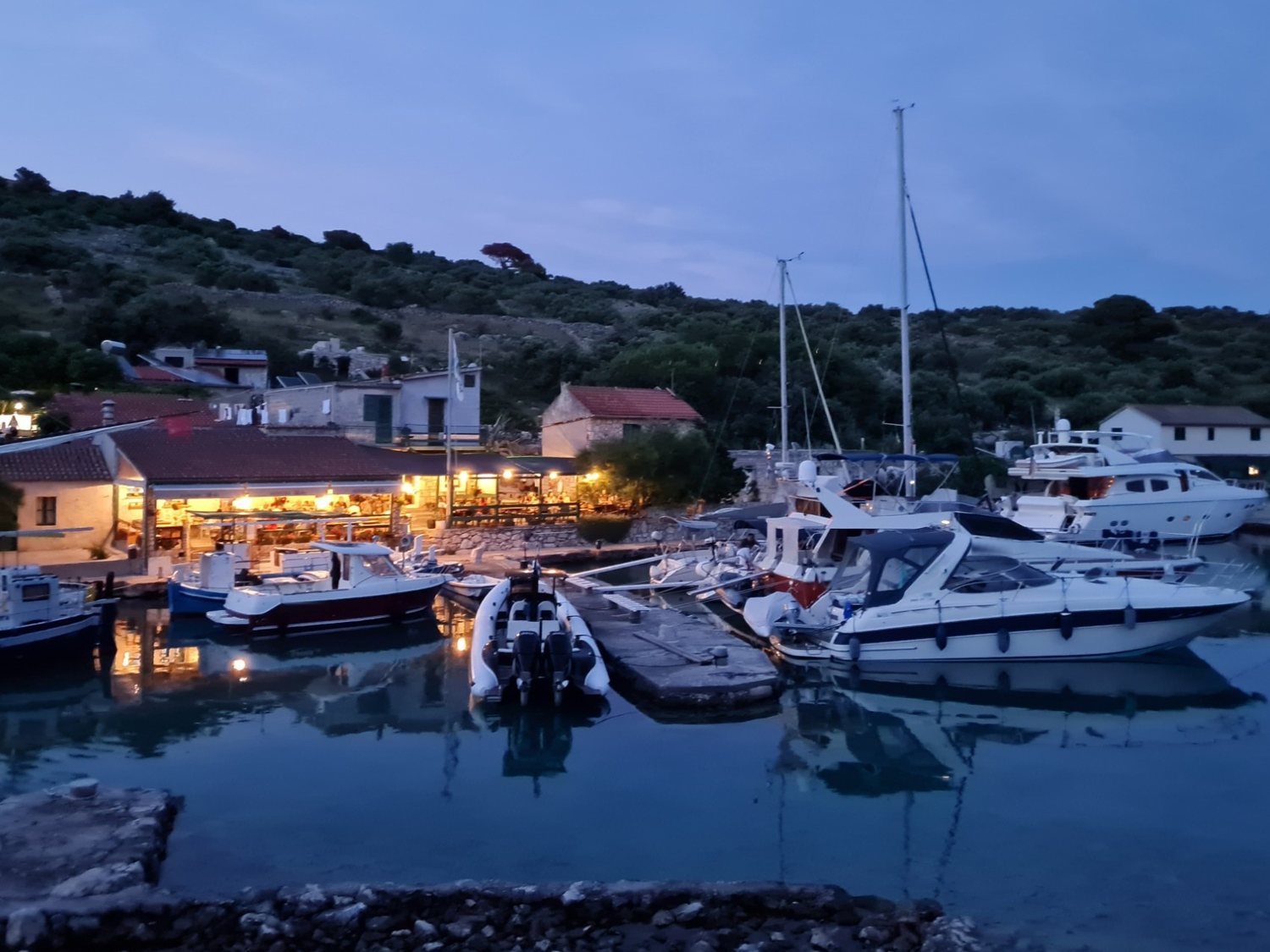
1. You can have two cruising areas instead of one

As a sole owner I would have had to choose: Croatia or the Rhine. You cannot have both. A boat cannot be in two places at once, and moving it between the two costs time, money and patience.
With co-ownership (fractional boat ownership) you can have both.
I am a co-owner of a motorboat in the Adriatic and one on the Rhine. Two cruising areas, two completely different experiences and one surprising side effect: when my mate is pottering around the Adriatic with his family, I do not have to go without a boat altogether. A weekend on the Rhine, a barbecue on the pontoon, the kids jumping into the water and going stand-up paddleboarding (SUP): that is not a bad alternative.
The Rhine is no stopgap, either. The Adriatic season starts earlier and ends later, so there are weeks in the shoulder seasons down there when nothing is happening on the Rhine yet, or any more. That is why our times of use hardly overlap. So I have two boats in two cruising areas and nearly always somewhere I can get out on the water.
For anyone torn between Lake Constance or the Baltic and Croatia: with one share in each of two boats, you do not have to choose.
And if your plans change at some point, you can sell your share again through PartABoat: because you want a new cruising area, because the family is growing and you want to size up, or because the group would rather share as three to have more time on the boat. That is simpler than a whole-boat sale and less of a wrench.
2. Standing idle does more harm than being used
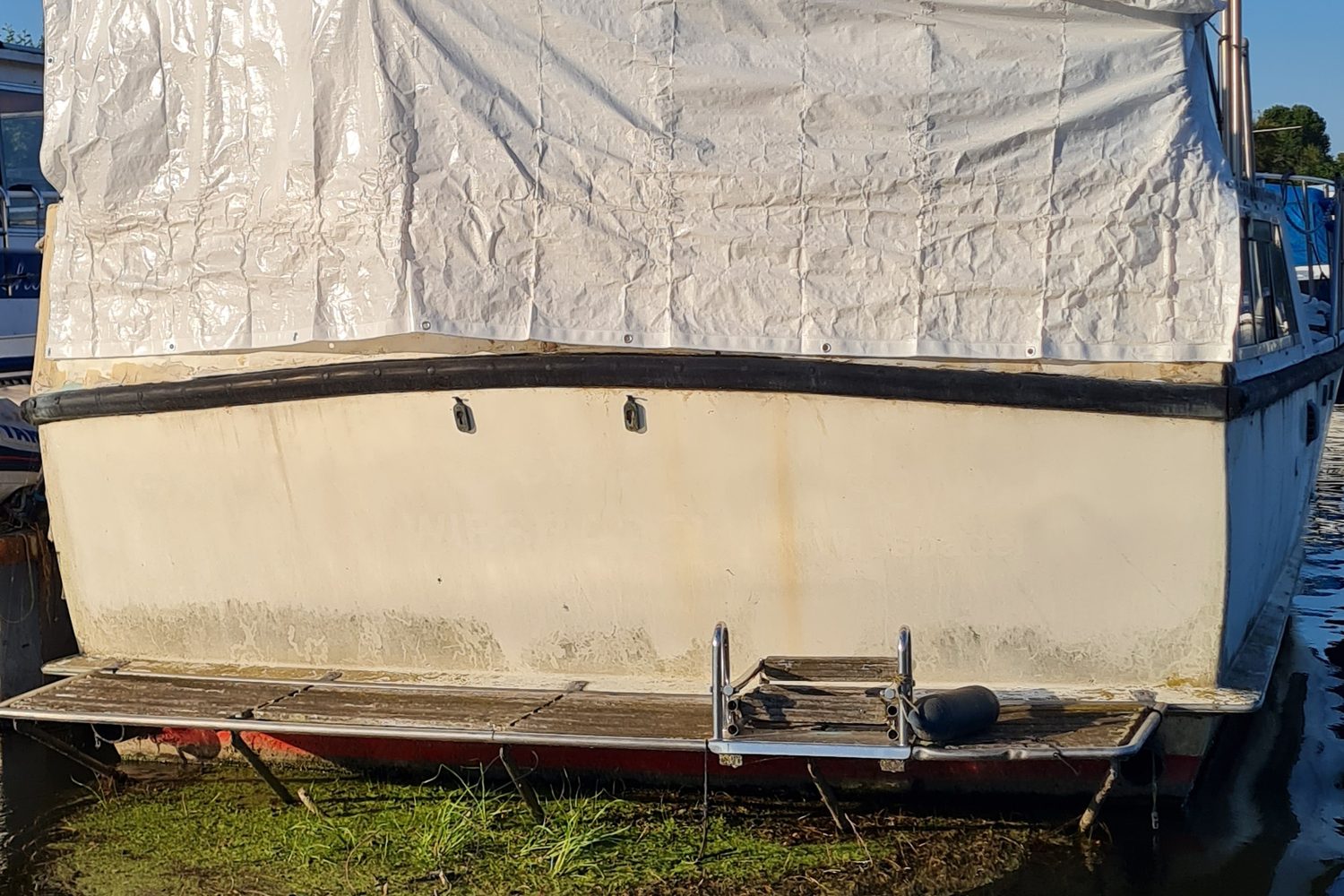
It sounds counterintuitive, but a boat that is moved regularly is in better condition than one that sits in the harbour all summer.
What happens when a boat stands idle:
- The engine suffers, seals dry out, fuel ages
- Growth builds up on the hull more quickly
- Moisture collects in the cabins and bilge
- Auxiliaries, pumps and valves seize up or start to leak
What happens with regular use:
- The engine stays in good running order, auxiliaries get flushed through
- Less growth means less antifouling work and a cleaner hull with less drag
- Small problems show up earlier, before they get expensive
A boat that stands idle for months collects growth on the hull, and that slows it down in the water and pushes up fuel consumption. With several owners the boat is used more and suffers less damage from standing idle.
3. You complement each other and save on service costs
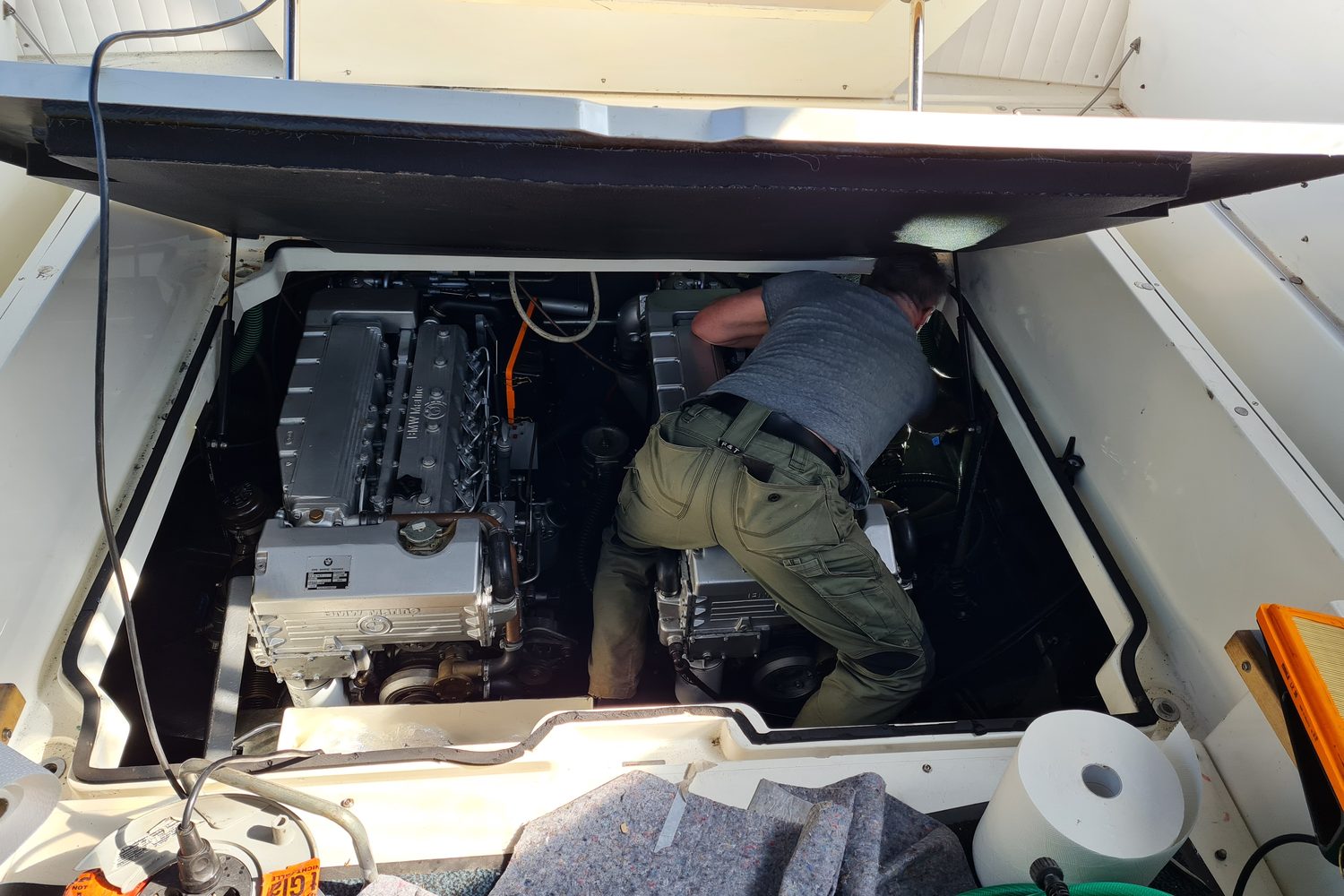
This is the benefit I have felt most strongly myself.
My co-owner knows his way around electrics and engines. I like polishing the boat in spring, refinishing the wood and looking after the practical jobs. We complemented each other perfectly: what one of us could not do alone, or would have had to pay good money for, we got done together.
Different owners bring different skills:
| Skill | Value to the co-owner group |
|---|---|
| Electrics / electronics | Saves service costs on instruments, lighting, onboard electrics |
| Engine maintenance | Oil changes, impeller, anode, no specialist yard needed |
| Polishing glass-reinforced plastic (GRP) / paintwork | Hull, superstructure, time-consuming but worthwhile |
| Woodwork | Refinishing teak deck, rails, fittings |
| General mechanics | Drive, steering gear, propeller shaft |
Nobody can do everything. But a group of two to four owners often covers an astonishing amount, and whatever is left over, you bear by share.
4. Bigger purchases get easier because you share them
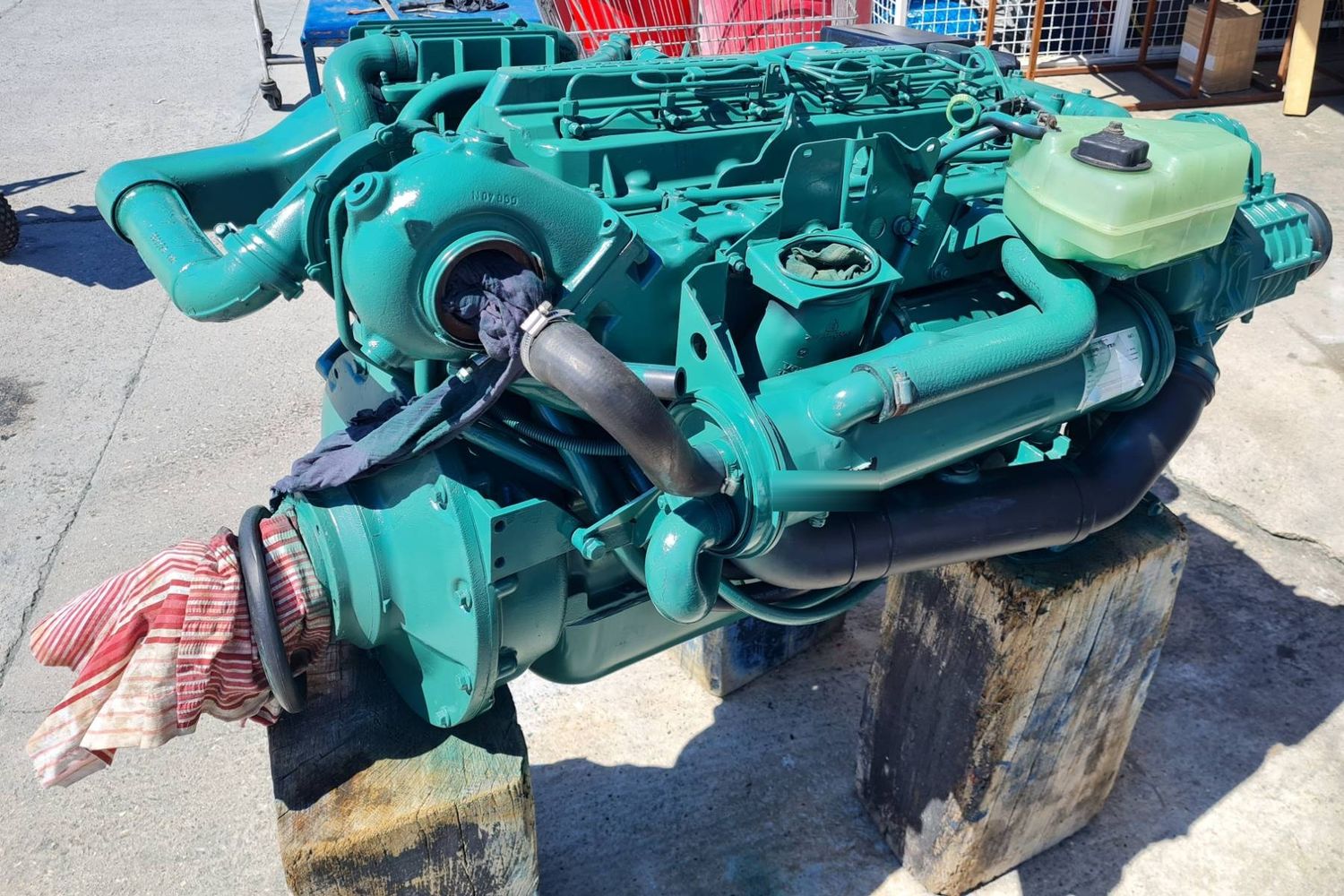
This is an argument I underestimated for a long time.
As a sole owner, sooner or later you face decisions such as: new upholstery for the cabin (€2,500), an engine overhaul (€4,000), new sails (€4,000–8,000), a new chartplotter (€2,000). You hesitate over each one. You put it off, wait another season, decide against it, and the boat ages faster than it needs to.
With co-owners the sums look different:
| Purchase | Sole owner | Your quarter (¼) |
|---|---|---|
| New cabin upholstery | €2,500 | €625 |
| Engine overhaul | €4,000 | €1,000 |
| New sails (mainsail and headsail) | €4,000–8,000 | €1,000–2,000 |
| New chartplotter | €2,000 | €500 |
| Full antifouling | €1,800 | €450 |
Source: example amounts, guide values from market research.
That makes a difference in your head: a €500 purchase feels different from a €2,000 one. The decision comes more easily.
That is not because owners who share are more careful. €2,000 divided by four is simply a different decision from €2,000 alone.
5. Nobody covers the same stretch twice
Hardly anyone expects this one, and it changes how you plan a boating holiday.
The classic problem: You have two weeks and want to explore the Adriatic. You set off from Split and head for Dubrovnik, but then you have to turn round because you have to bring the boat back. You cover the same stretch twice. The time pressure rises and the relaxation falls.
With co-ownership it works differently:
Imagine there are three owners. Owner 1 sets off from Split and goes to Dubrovnik: two weeks, relaxed, with no trip back. Owner 2 takes over the boat in Dubrovnik and explores Montenegro and the Bay of Kotor. Owner 3 brings the boat back to Split in the autumn.
Nobody covers the same stretch twice. Everyone sees more. The boat moves along a route that is split across the season.
The same principle works on the Rhine, and anyone who knows inland cruising also knows the so-called Sauerkraut Tour: from Koblenz up the Moselle, on along the Saar, through the Saar Canal into France and via the Marne-Rhine Canal back to Strasbourg, and from there down the Rhine again to Koblenz. A round trip through three countries, a good two to three weeks, done by one of the owners. At the end the next one takes over the boat in Koblenz and carries on to Cologne or into the Dutch canals. Nobody turns round, everyone gets further.
What co-ownership is not
For completeness, because objections deserve a fair answer:
The scratch calculation: what if a co-owner damages the boat?
Most damage has no culprit. The boat lies in an unfamiliar marina for a week, someone brushes the rubbing strake while mooring and does not even notice. The tap in the galley starts to drip, the shower door jams, the scrape on the hull is only noticed when the boat is lifted out. Not maliciously concealed. Simply never seen, or just wear.
Anyone who causes damage and notices it reports it and answers for it; that goes without saying. The logbook and condition records in the Living Contract (co-owner agreement) make this traceable. Larger damage is covered by hull insurance, depending on its terms, with an excess and limits like any insurance.
That leaves the rest: the cases without a culprit and the worry that someone might stay quiet after all. Both end up in the same calculation. According to market research, unplanned repairs come to €1,000–3,000 per boat per year; your quarter of that is €250–750 a year.
Against that stands your saving: as a quarter owner of the sailing yacht Bavaria Cruiser 41 (built 2015, Croatia) you save around €9,375 in running costs compared with sole ownership, every year. The calculation holds for two people as well: as a half owner of the same Bavaria you save around €6,250 in running costs, every year. Your part of unplanned repairs: €500–1,500. The saving is several times what the typical annoyances cost you.
And something else belongs to this: scratches are not a feature of co-owners, they are a feature of boats. The unfamiliar marina, the bollard, your own mishap: all of it happens to a sole owner just the same. Except that they bear 100% of every piece of damage, on top of the full running costs. Sole ownership is cheaper only if your portion of such damage (tap, scratch in the gelcoat, shower door) grows larger than your saving from the calculation above. The big items, engine and drive, are not a question of scratches: they are either hull insurance territory or predictable wear, and the table above shows how much easier it is to shoulder exactly this kind of spending together.
From personal experience: My boat was in winter storage on the Rhine when someone drove into the rail, bent it completely, €3,000 repair, and nobody came forward. As a sole owner you pay all of that. Split between four it would have been €750.
“Then it isn’t my boat any more.”
Yes, it is. You are a co-owner: your purchase is documented by the purchase contract and the handover record, and you set your weeks of use in the Living Contract. No charter feeling, real ownership.
“What if the other person doesn’t look after the boat?”
The Living Contract covers this: logbook and condition records after every trip. What clean means, who cleans what and how the boat is handed over, you set down in writing before buying. No guesswork, no blind trust. And what damage really costs is shown by the scratch calculation above. In sole ownership you bear it alone.
“What if I want out at some point?”
The Living Contract settles leaving firmly: a right to buy among the co-owners and, if you wish, finding a buyer through the marketplace, with deadlines set out in the Living Contract.
Conclusion
Co-ownership saves money, and that is not a bad reason. But it is not the only reason I do it.
It saves time, spreads responsibility, opens up more cruising area and makes looking after the boat easier. It brings together people with similar passions and often different strengths. And it makes owning a boat what it should be: a pleasure, not a burden.
If you want to know whether co-ownership suits you, talk to us, by phone or through the contact form. No call centre, a real conversation.
Boat chat View all boats Try the cost calculator All guides
About the author: Ekki is the founder of PartABoat and himself a co-owner of two motorboats, one in Croatia and the other on the Rhine. PartABoat brings together co-owner groups for used boats in Germany and in Croatia.