
Fractional boat ownership: the complete guide
Reading time: about 23 minutes
A boat of your own, without carrying it all alone: that is boat co-ownership, also known as fractional boat ownership. Several people own a boat together, not on hire but as genuine owners. Each co-owner buys their share with a purchase contract and handover record, bears their part of the running costs and uses the boat according to a joint plan. In Germany the model is based on the rules for fractional co-owners (Bruchteilsgemeinschaft) in the German Civil Code (BGB), §§ 741 ff.
That sounds straightforward, and at its core it is. But between “sounds good” and “I’ll sign” lie some fair questions: What does it really cost? Who is liable? What happens if there is a dispute? And is it even worth it compared with chartering?
This guide answers those questions with concrete figures, the legal basics and personal experience. It promises nothing in glossy brochure language and hides nothing in the small print; it sets out a calculation that you can check for yourself.
The guide is written for two groups: for buyers who want to know whether a share is worth it, and for owners who are thinking about selling shares in their boat instead of giving it up entirely. All the worked examples are based on real boat models and market prices: a Bavaria Cruiser 41 (sailing boat, built 2015) and a Prestige 42 (motorboat, built 2010), both in Croatia. We say where the figures come from and where they are estimates.
This guide was written for owners and buyers in Germany. Legal, tax and boat-paper points refer to German law and practice; other countries may differ.
1. What is boat co-ownership (fractional boat ownership), and what is it not?
Boat co-ownership is fractional co-ownership: you buy a real share in a specific boat, for example a quarter, a third or a half. Your share is documented by contract, through the purchase contract and handover record. You are a co-owner within the meaning of the BGB, not someone hiring a boat and not the customer of a subscription model.
There are models on the market that sound similar but work differently:
| Co-ownership | Charter | Private arrangement | |
|---|---|---|---|
| Ownership? | Yes, documented | No, hire | Yes, but without structure |
| Share of costs? | By share, transparent | Weekly price | Settled individually |
| Predictable use? | In the Living Contract (co-owner agreement), set by you | By booking | By arrangement |
| Can you leave? | Share can be sold | No commitment | Unclear |
| Contract standard? | Living Contract | Charter terms | Often none |
The co-ownership column follows the Living Contract.
The last of these, the private arrangement, is the most common case in practice. Two mates buy a boat together and settle everything on a handshake. That works as long as it works. But if one of them wants out, the costs rise or use is unevenly spread, there is no framework. That is exactly what PartABoat provides: contracts in which you set your usage plans, rules for leaving and, as soon as PartABoat accompanies the purchase, an organised way of getting to know each other.
One more detail that is often misunderstood: at PartABoat there is a small, fixed co-owner group of up to four co-owners. That is a deliberate decision. With more than four, the personal bond with the boat weakens, the weeks of use get too scarce, and it feels like charter, only more awkward. Four is the limit up to which ownership still feels like ownership.
The typical boat on PartABoat is 5 to 15 years old and lies in Croatia or on a German inland waterway. No superyachts, no luxury segment, but solid used boats for people who want to get out on the water rather than show off. The Prestige 42 and the Bavaria Cruiser 41, which we use as worked examples in this guide, stand for this segment.
In detail: Buying a boat together: legal basics and process
2. Who is co-ownership for?
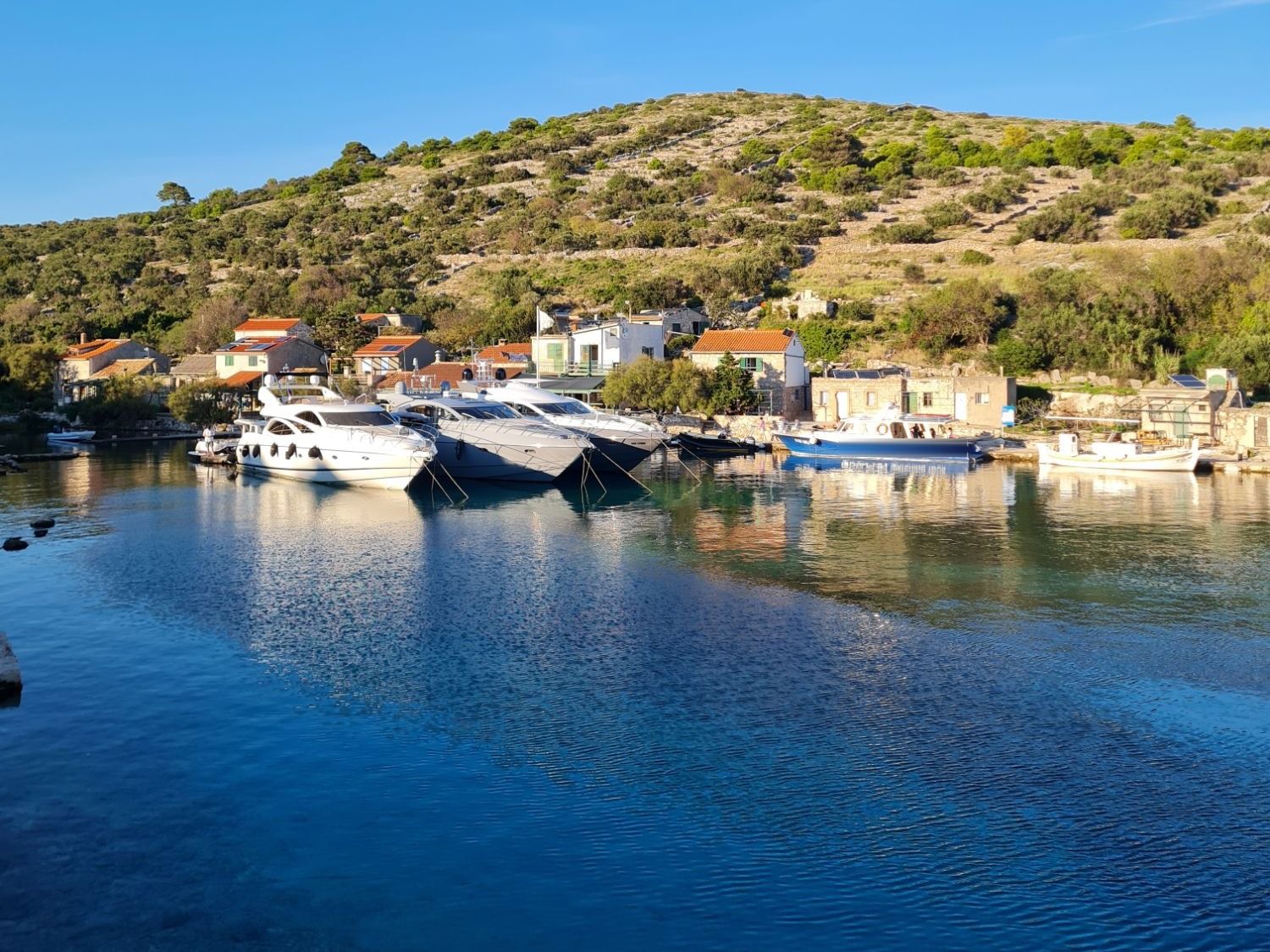
The short answer: for anyone who wants a boat but does not want to pay for it, use it or look after it alone. The longer answer shows that the motives are very different.
If you are looking for a boat:
You have chartered several times and you are doing the sums. Three weeks of high season in Croatia cost you €9,000–10,500 for a sailing boat, €24,000–30,000 for a motorboat, every year, and at the end nothing belongs to you. A boat of your own would be the alternative, but a €100,000 purchase price plus approx. €12,500 running costs a year for a sailing yacht, or €230,000 plus approx. €19,500 for a motorboat, is too much for 4–6 weeks of real use. Co-ownership solves exactly this equation.
You want to get out on the water, but the way in looks too steep. No licence, no experience, no idea what a berth costs. The thought of buying a boat alone seems like a project for other people. A quarter share lowers the hurdle, financially and practically. And co-owners with more experience are no disadvantage.
You already have a small boat and want to size up. The seven-metre cabin boat is no longer enough, the family has grown, friends want to come along, you want to be able to stay overnight without everyone sitting on top of each other. You can put the proceeds from selling the small boat straight to use.
Worked example: your seven-metre boat fetches €15,000–25,000 when sold. A quarter of a Bavaria Cruiser 41 costs approx. €25,000. Depending on the proceeds, the sale covers the share almost completely, and suddenly you are on a boat where friends can stay overnight, grandchildren can come along and longer trips are possible.
You want a boat of your own, but no association duties and no minutes of meetings. With a share you have your boat and fixed co-owners; what you do on the boat yourselves and who uses it when, you decide among yourselves.
More on this: For buyers
If you own a boat:
You want to sell, and the one buyer does not come. Your boat has been on the usual marketplaces for months. Selling it off below value is no solution. Shares open up a different circle of buyers: people who want exactly this kind of boat and would rather own it between two, three or four people.
Your boat sits idle too often. You are out on it four to six weeks a year, and you are attached to it. If you bring co-owners on board, your boat gets used more, the work is shared, and you stay on board.
More on this: For owners
3. What does a boat share cost?
A boat share costs you two things: once the purchase price for the share, and every year your part of the running costs.
Here are two concrete examples of typical boats at PartABoat, with real boat models and prices for Croatia:
Sailing boat: Bavaria Cruiser 41, built 2015
| Item | Whole boat | ¼ share |
|---|---|---|
| Purchase price | approx. €100,000 | approx. €25,000 |
| Running costs / year | approx. €12,500 | approx. €3,125 |
| Use (on paper) | on paper 50 weeks, real use 4–6 | 12 weeks |
On paper means: the share of 50 usable weeks a year; a quarter comes to 12 weeks. How you allocate them, you set in the Living Contract. Real use: this is how many weeks a sole owner typically uses their boat.
Basis: rule of thumb approx. €1,000 per metre per year for sailing boats in Croatia (approx. 12.5 m). Source: guide values from market research.
Motorboat: Prestige 42, built 2010
| Item | Whole boat | ¼ share |
|---|---|---|
| Purchase price | approx. €230,000 | approx. €57,500 |
| Running costs / year | approx. €19,500 | approx. €5,000 |
| Use (on paper) | on paper 50 weeks, real use 4–6 | 12 weeks |
Basis: rule of thumb approx. €1,500 per metre per year for motorboats in Croatia (approx. 13 m). Covers berth, insurance and routine maintenance, without major repairs and fuel.
The rule of thumb for motorboats is based on personal experience with two motorboats (Croatia and the Rhine), the one for sailing boats on market research. Both are to be understood as guide values, not a guarantee. Berth, insurance rate and the boat’s condition can shift the costs in either direction.
Running costs by cruising area
The costs per metre per year vary considerably from one cruising area to another. Here are the guide values, for motorboats from personal experience, for sailing boats from market research:
| Boat type | Croatia / Adriatic | Germany / inland |
|---|---|---|
| Sailing boat | approx. €1,000/m | approx. €600/m |
| Motorboat | approx. €1,500/m | approx. €800–1,000/m |
The western Mediterranean (Côte d’Azur, Balearics) lies above the Croatia values; berths there are considerably more expensive.
What the rules of thumb do not include: major repairs (engine overhaul, replacing the rig, osmosis treatment), extensive upgrades (new upholstery, electronics upgrade) and fuel. You split repairs and upgrades by share when they arise; they are one of the reasons why the Living Contract contains a reserve clause; fuel is paid by whoever uses the boat.
In detail: What a boat really costs: the honest calculation
4. Charter vs. share: the break-even calculation
The question everyone asks: from what point is a share cheaper than carrying on chartering? That point is called break-even. The answer depends on boat type, charter prices and use, but the direction is clear.
Sailing boat: Bavaria Cruiser 41, built 2015, Croatia
Three weeks of bareboat charter for a Bavaria Cruiser 41 in the high season cost approx. €3,000–3,500 per week, which makes €9,000–10,500 per year.
| Charter (3 weeks/year) | Sole ownership | ¼ share | |
|---|---|---|---|
| Purchase price | – | €100,000 | €25,000 |
| Costs / year | €10,500–12,000 | approx. €12,500 | approx. €3,125 |
| Costs over 5 years | €52,500–60,000 | €162,500 | €40,625 |
| Use | 3 weeks (booked) | on paper 50, real use 4–6 | on paper 12 |
| Ownership at the end | Nothing | Yes (with depreciation) | ¼ share (residual value) |
Purchase price and running costs as in chapter 3, charter prices with sources further down in this chapter. Charter with around €1,500 additional costs per booking. The charter weeks are calculated at high-season prices. With a quarter, you are entitled to at least 2 weeks under our template in July and August; the rest of your 12 weeks on paper fall in the shoulder seasons.
Break-even: approx. 3–3.5 years. Longer than with the motorboat, because charter prices for sailing boats are considerably lower. From year 4 you are permanently cheaper on the water than with charter, and you are left with the residual value of your share.
Motorboat: Prestige 42, built 2010, Croatia
Three weeks of bareboat charter in the high season (July/August) cost approx. €8,000–10,000 per week for a motorboat of this class, which makes €24,000–30,000 per year. On top of that come the transit log (€300–390), the damage bond, fuel and, if needed, a skipper.
| Charter (3 weeks/year) | Sole ownership | ¼ share | |
|---|---|---|---|
| Purchase price | – | €230,000 | €57,500 |
| Costs / year | €25,500–31,500 | approx. €19,500 | approx. €5,000 |
| Costs over 5 years | €127,500–157,500 | €327,500 | €82,500 |
| Use | 3 weeks (booked) | on paper 50, real use 4–6 | on paper 12 |
| Ownership at the end | Nothing | Yes (with depreciation) | ¼ share (residual value) |
Purchase price and running costs as in chapter 3, charter prices with sources further down in this chapter. Charter with around €1,500 additional costs per booking. The charter weeks are calculated at high-season prices. With a quarter, you are entitled to at least 2 weeks under our template in July and August; the rest of your 12 weeks on paper fall in the shoulder seasons.
Break-even: approx. 2–3 years. After the second to third season you are cheaper on the water than with charter, and after that you save €20,000–26,000 every further year compared with charter.
Important on the charter prices: All figures apply to bareboat charter in the high season (July/August) in Croatia. Newer models (built 2020+) cost 20–40% more. In May and September charter prices fall by around 15–45%, in June hardly at all. Always note the year of build when comparing, otherwise the calculation is not honest. Sources: europe-yachts.com, yacht-rent.de, boataround.com (as of 2025/2026).
The additional charter costs in detail
The charter prices above are basic charter amounts, the figure on the offer. What most price comparisons leave out: additional costs are added at check-in. Here is a real example from Croatia for one booking of 3 weeks at a stretch (sailing boats and motorboats, as of 2025/2026):
| Item | Cost (approx.) | Frequency |
|---|---|---|
| Transit log / permit | €300–390 | 1× per booking |
| Outboard service (tender) | €350 | 1× per booking |
| Final cleaning | €285–300 | 1× per booking |
| Bed linen | €235 | 1× per booking |
| Charter excess insurance | €150–250 | 1× per booking |
| Parking (charter base) | €120 | 3 weeks × €40 |
Source: price list of a Croatian charter base, as of 2025/2026, and personal experience.
Total additional costs: approx. €1,450–1,650 per booking, before fuel and provisions. These are costs that hardly appear in any charter price comparison but arise with every booking.
With a boat of your own, whether whole or as a share, these items fall away: your bed linen is on board, you have your own tender, and you do the final cleaning yourself. The tables above already include them at around €1,500 per booking. In Croatia, as an owner you pay the tourist tax and a vignette every year, both according to boat size; for a 50-foot boat together around €640 a year (figure from experience, as of 2026).
What the table does not show: residual value
In the comparison above the charter money is simply gone: at the end of the season you have nothing to show for it. When you buy a share, after 5 years you have something to show for it: your share in the boat. Used boats lose value (rule of thumb: 3–5% per year, depending on condition and care). A well-kept Bavaria Cruiser 41, built 2015, is still worth €75,000–85,000 after five years of co-ownership, so your quarter is worth approx. €19,000–21,000. Residual value means: your share has a sale value. How much you get depends on the boat and the buyer; a single share often fetches less on the market than its portion of the whole boat.
That means: even if you leave after four years and sell your share at a moderate loss, you have spent less overall than with charter, and you have had your own boat. Not just any boat from the fleet, but yours: known condition, personal belongings on board, familiar handling.
Cross-check: when is charter the better deal?
If you only go out for one week a year, want to move between different cruising areas or have no appetite for sharing responsibility for maintenance, charter is the better choice. Co-ownership is worth it from approx. 2–3 weeks of use a year and a certain attachment to the boat and cruising area. The calculator helps you run through your personal scenario.
Work it out yourself: Charter vs. share: cost calculator
5. How does buying work? The PartABoat process in 4 steps
The most important principle: You decide only once you know the boat and the co-owners. Before that, no money to PartABoat or the seller, only travel and, if needed, a surveyor. This is how it works:
Step 1: Discover
You search the PartABoat marketplace, filtering by cruising area, boat type and budget. Each listing shows the purchase price, available shares and estimated running costs per share. You register your interest, free of charge and without commitment.
Details: what exactly happens?
You get access to the full listing: photos, technical data and, if available, a condition report, all as stated by the seller, plus the share structure. All four shares are offered in parallel from day 1, never one after the other.
Costs: €0 · Duration: immediate
Step 2: Check & get to know each other
You view the boat, on site or by detailed video tour. If needed you commission an independent surveyor. You negotiate the share price with the seller; in a whole-boat sale it is fixed as soon as the seller is bound to your group (Step 3). As soon as PartABoat accompanies the purchase, it then organises a get-together between all interested parties, by video call or on site. Fixed list of questions: usage habits, expectations, experience of cruising areas, how you treat the boat. Until then, on request, we introduce you to other people interested in the same boat, if they would like that too. Not a good fit? You step away, free of charge.
Details: what exactly happens?
You organise the viewing yourself; as soon as PartABoat accompanies the purchase, also with its support. You bear the travel and surveyor costs. PartABoat provides a Checklist for buying a boat. The agreed price is documented in the later contract. In a whole-boat sale, getting to know each other is a condition for your stated share counting for the group; anyone who joins later talks instead to everyone who is already ready to buy. When you buy into an existing co-owner group, you get to know the existing co-owners beforehand. As soon as PartABoat accompanies the purchase, it organises the conversation and sets the framework but does not actively moderate.
Costs: travel and, if needed, a surveyor (€400–800) · Duration: 4–8 weeks
Step 3: Secure your place
With an existing co-owner group you decide directly to buy, with no intermediate step and no advance costs.
In a whole-boat sale the rule is: nothing becomes firm until you are all together. Only when all shares fit and the seller has confirmed your group do you accept their offer in text form; nothing is paid at this point. The option fee, graded by share size (€750 for a quarter, €1,000 for a third, €1,500 for a half, €2,250 for three quarters, each at most 10% of the share of the purchase price), is your price for the seller committing the boat to your group alone for 45 days. You owe it to the seller only if you do not buy in the end, and you then pay it when the option period ends, directly to them and not to PartABoat. Until you accept the offer, leaving costs you nothing. You pay nothing to PartABoat until completion: then the structuring fee. The seller pays PartABoat the commission.
Structuring fee, commission and option fee are final prices. Any statutory VAT and other price components are contained in them.
Details: what exactly happens?
In a whole-boat sale you pay the purchase price only once all buyers have exercised their option, on the handover date. Once the seller’s offer has reached you, they are bound; the option period lasts, as a rule, 45 days: price fixed, no sale to anyone else. If the group does not come together, nobody pays an option fee.
Costs (whole-boat sale): option fee by share size (only if you do not buy in the end, to the seller; the amounts are in chapter 5, Step 3) · Structuring fee: 1.5% of the value of the share to PartABoat (min. €500, max. €1,500, due after completion) · Costs (existing co-owner group): €0 in advance · Binding period: as a rule 45 days
Step 4: Become an owner
Sign the purchase contract, handover of the boat, keys and papers, then transfer the purchase price directly to the seller and sign the handover record. Then your purchase is documented by the purchase contract and handover record. For boats entered in the ship register, you have yourself entered there with your share; for this the register needs declarations from you and from the seller with notarially certified signatures. The Living Contract takes effect. Welcome to the co-owner group.
PartABoat is just starting: listing and enquiries already work. Until PartABoat accompanies the purchase, you buy directly; you then organise getting to know each other and forming the group yourselves. How to secure the purchase price is set out in the information sheet.
Details: what exactly happens?
The purchase contract is a contract between you and the seller; PartABoat is not a party to the contract but the intermediary. Under the purchase contract, ownership of your share passes on handover of the boat; if the boat is entered in the inland vessel register, only on entry in the register. If the boat sails under a foreign flag, other law may apply to the transfer of ownership; you clarify that before buying. From then on the Living Contract governs use, costs, duties and leaving.
Your costs: share price and structuring fee (1.5% of the value of the share, min. €500, max. €1,500); the commission of 5.5% is borne by the seller · Duration: 1–2 weeks
Summary: your risk at each stage
| Step | Your maximum risk | Can you leave at any time? |
|---|---|---|
| 1 Discover | €0 | Yes |
| 2 Check & get to know each other | Travel costs and surveyor | Yes |
| 3 Secure your place | Existing co-owner group: €0 · Whole-boat sale: option fee by share size, only if you do not buy in the end (the amounts are in Step 3) | Yes (free of charge until you accept the offer; if you then do not exercise your option, you owe the seller the option fee) |
| 4 Become an owner | Share price | Only by selling your share |
The process is built so that your financial risk rises only when you already know the boat and the co-owners and decide consciously. In a whole-boat sale the rule is: until the handover you pay nothing; what costs you something before then is travel and time. You owe an option fee only if you do not buy in the end, and it goes to the seller. With an existing co-owner group you pay nothing to PartABoat or the seller before the purchase contract.
In detail: How it works: the 4 steps in detail
On safety: Safety and trust: who is liable? How does it work?
6. The contract: what the Living Contract says
In the Living Contract, each co-owner group at PartABoat sets down its most important rules with binding effect. It is not a rigid document: if your wishes change, you can adapt it together.
Usage plan
Who uses the boat when? The PartABoat template of the Living Contract allocates the high-season weeks by share and rotates the allocation every year. You decide together which weeks count; with July and August, each owner is entitled to at least two weeks under our template. The rest you divide among yourselves, in turn or by arrangement.
Cost split
Each owner bears their share of the running costs: berth, insurance, maintenance. The Living Contract defines an annual reserve for unplanned repairs. Larger items of spending (for example an engine overhaul or new sails) you decide together; what can be decided by simple majority as day-to-day management, you set yourselves.
Logbook
After each trip the owner records engine hours, consumption, damage and anything unusual in the logbook; whether with photos and a checklist, you set together. That sounds like bureaucracy, but it is a quick job, and it protects all sides, including you if you hand over the boat in perfect condition and the next person notices a scratch.
Maintenance duties
Who is responsible for what? Which jobs you take on yourselves and what goes to specialist yards, you set together; quotes are obtained by the contact person, who changes every year.
Leaving
Anyone who wants to leave can sell their share through the PartABoat marketplace. The other owners have a right to buy among themselves. For this the Living Contract names deadlines and a price benchmark in case you do not agree.
If there is a dispute
If owners disagree, the Living Contract provides a route: first the conversation between the owners, then anyone can propose conciliation by a neutral third person. The route to the courts remains open.
What happens if someone does not pay?
If an owner does not pay their share of the costs, the rule in the Living Contract applies: after a reminder and a reasonable further period, the other owners can step in and pay for them and demand reimbursement from them. The PartABoat template deliberately provides for neither a contractual penalty nor exclusion from use.
Can the contract be changed?
Yes, that is why it is called the Living Contract. Changes require the consent of all owners. Typical occasions: a new cruising area, changed times of use, additional major spending. The framework stays stable, the details adapt.
What belongs in the co-owner agreement is shown, question by question, in the guide Contract for boat co-ownership.
7. Risks and objections
Co-ownership is no miracle cure. There are legitimate concerns, and it would be dishonest to keep quiet about them.
“Then it isn’t my boat any more.”
Yes, it is. Every purchase of a share is documented by the purchase contract and handover record. Legally your share is just as real as that of a sole owner, you simply share it with others. No charter feeling. Real ownership with real residual value.
“What if my co-owner doesn’t look after the boat?”
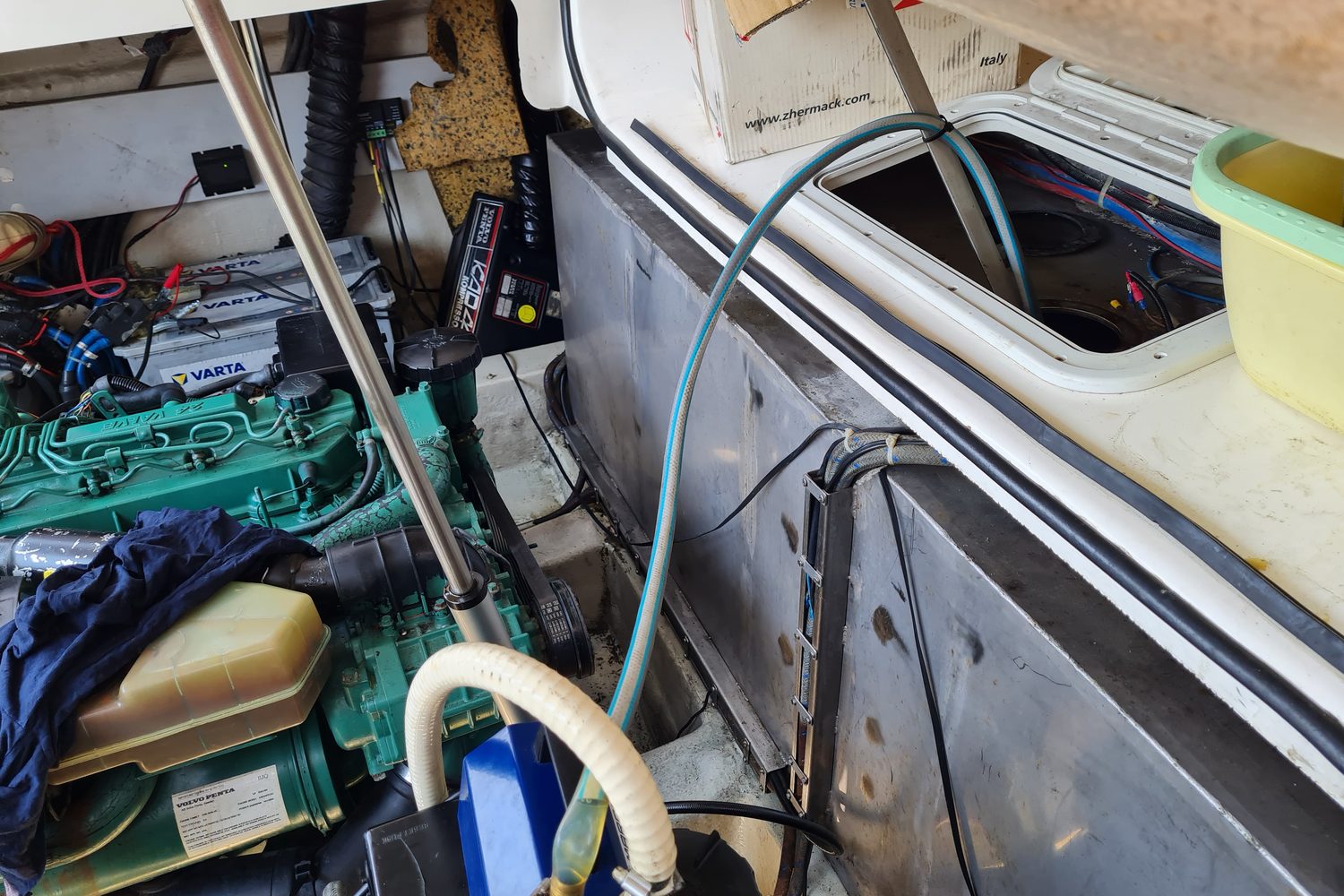
The Living Contract provides for a logbook after each trip, recording damage and anything unusual. Which standards of care apply and what follows if someone does not keep to them, you set together. That is not blind trust but a framework you set yourselves.
“What if the chemistry isn’t right?”
That is why you get to know each other before the decision to buy. As soon as PartABoat accompanies the purchase, it organises the meeting and sets the topics. Until then, on request, we introduce you to other people interested in the same boat, if they would like that too, and you arrange to meet yourselves. If it is not a good fit, you step away before you have paid a cent for the share.
Your maximum risk up to that point: the trip to the viewing.
“What if I want out at some point?”
The Living Contract settles leaving firmly. You can sell your share through the PartABoat marketplace. The other owners have a right to buy among themselves. There is no minimum period of ownership for selling your share. If no buyer is found, dissolving the co-ownership can be demanded in the first three years only for good cause, after that with six months’ notice expiring on 31 October. And if you leave quickly, you may not achieve the full price.
“Doesn’t the share lose value?”
A boat loses value, that is true. Rule of thumb: 3–5% a year, depending on condition, care and the market. But first, a hire car loses value too; you just pay the full price regardless. And second, depreciation falls considerably on well-kept boats from a certain age: a 15-year-old Bavaria Cruiser 41 in good condition loses less value per year than a 5-year-old one.
8. Co-ownership for owners: share your boat instead of selling
So far we have looked at this from the buyer’s point of view. But co-ownership has a second side: that of the owners who already have a boat.
You are out on your boat four to six weeks a year, and the rest of the time it lies idle. You do not want to sell, you are attached to it.
The alternative: you bring co-owners on board through PartABoat. Your boat gets used more, the work is shared, and you stay on board. A boat that is moved regularly suffers less damage from standing idle than one that lies unused for months: engine, hull and auxiliaries all benefit from use.
Worked example: Your sailing yacht Bavaria Cruiser 41 costs you approx. €12,500 in running costs a year. For the half you get approx. €50,000 and then bear approx. €6,250 a year. With the motorboat Prestige 42 at approx. €19,500 running costs you sell two quarter shares and keep the half; your part of the costs falls to approx. €9,750, and you also have €115,000 in sale proceeds in your account. On paper your half share is still allotted 25 weeks a year, and the co-owners share the rest of the time; how, you set together.
In the end it is still your boat, and you decide together where it lies.
If your boat is on the usual platforms and finds no buyer, shares open up a different circle of buyers: people who want exactly this kind of boat and would rather own it between two, three or four people.
You share in the decisions: in the Living Contract you set together how you allocate use, and the co-owners have a right to buy among themselves if a co-owner leaves. What clean means, who cleans what and how the boat is handed over, you set down in writing before buying.
In detail: Share your boat instead of selling: a guide for owners
Get started: For owners: how it works
9. Frequently asked questions
What does a boat share cost?
A quarter share in a Bavaria Cruiser 41 (built 2015, sailing boat) costs approx. €25,000 purchase price plus approx. €3,125 running costs a year. For a Prestige 42 (built 2010, motorboat) it is approx. €57,500 plus approx. €5,000/year. You will find the exact figures for each boat on the marketplace.
Am I really an owner?
Yes. Your purchase is documented by the purchase contract and handover record; for boats entered in the ship register, you have yourself entered there with your share; for this the register needs declarations from you and from the seller with notarially certified signatures. Your share belongs to you: you can sell it, leave it to your heirs or give it away. Boats have no public title register. That the seller is the owner is shown by the documents on their own purchase; they hand these over to you as far as they have them, and you check them before buying.
How many weeks can I use the boat?
With a quarter share it is 12 weeks a year on paper; how you allocate the weeks, you set together in the Living Contract. The PartABoat template allocates the high season by share; if you set July and August as the high season, each owner is entitled to at least 2 weeks under our template. Actual use depends on the cruising area and your circumstances; 12 weeks is a calculation, not a guarantee of use.
What happens if I want to sell my share?
You give the other co-owners notice of your wish to sell and look for a buyer, privately or through the PartABoat marketplace. Within 30 calendar days of the notice the other owners can take over the share themselves, at the price your buyer would pay if the notice names it, otherwise at the share of the market value of the whole boat. They can reject your buyer only for good cause relating to that person. Once the purchase runs through PartABoat, you can instruct PartABoat; it then arranges the sale, and your buyer pays you the purchase price directly on the handover date. There is no minimum period of ownership for selling.
Do I need a boat licence?
That depends on the cruising area and the boat. On German inland waters the rules vary with engine power and the waterway; which licence is required in a cruising area abroad, you clarify before buying. As soon as PartABoat accompanies the purchase, we raise it when you get to know each other.
Can I offer my own boat as a share?
Yes. You list your boat through PartABoat. PartABoat looks at the listing before it is published; PartABoat does not verify the details in it, nor the boat itself. As soon as PartABoat accompanies the purchase, it then organises the introductions and accompanies the conclusion of the contract. You remain the owner of the shares not sold. More on this.
Where are the boats?
At present PartABoat focuses on Germany (inland and coast) and Croatia (Adriatic). On the marketplace you can see the cruising area for each boat; the seller names the berth in conversation.
Conclusion
Co-ownership is neither a trick nor a stopgap. It is a structured way of owning a boat, with clear contracts, shared costs and real ownership. It does not suit everyone: if you need your boat every weekend, sole ownership is the right choice. But for anyone who wants a boat without bearing the full load alone, it is a calculation you can check for yourself.
I have done it this way for years: I share two boats with my mate. Not because it is perfect, but because it works better than anything else I know. We divide up the weeks without any trouble, neither of us has to shoulder everything alone, and at the end of the season I am not annoyed by the bill.
If you have read this far, you know the basics. Next, take a look at the current boats, or talk to us, by phone or through the contact form. No call centre, a real conversation.
View all boats Boat chat How it works for owners All guides
About the author: Ekki is the founder of PartABoat and a co-owner of two motorboats, one in Croatia and the other on the Rhine. Together with his mate he has owned and used five boats over the years. PartABoat brings together co-owner groups for used boats in Germany and Croatia.