
What a boat really costs: the honest calculation
Reading time: about 18 minutes
Anyone who wants to buy a boat knows the purchase price. What most people underestimate: the running costs are higher than the purchase price suggests, and they never stop. Berth, insurance, maintenance, winter storage, antifouling, smaller repairs: it adds up to amounts that surprise many first-time buyers.
This article sets out all the costs, with specific figures, separated by boat type and cruising area. We don’t flatter the figures and we don’t paint them black. You find out what you need to know before you sign.
This guide was written for owners and buyers in Germany. Legal, tax and boat-paper points refer to German law and practice; other countries may differ.
Here are the key figures at a glance:
| Prestige 42 (motor) | Bavaria Cruiser 41 (sail) | |
|---|---|---|
| Purchase price | approx. €230,000 | approx. €100,000 |
| Running costs/year | approx. €19,500 | approx. €12,500 |
| ¼ share, purchase price | approx. €57,500 | approx. €25,000 |
Purchase prices: market research. Running costs: rule of thumb from chapter 2.
1. The purchase price, and what comes on top
The purchase price is the figure everyone knows. But it is not the only figure that falls due when you buy. Depending on the situation, incidental costs of buying come on top:
Surveyor’s costs
An independent marine surveyor costs €400–800 for typical boats at PartABoat (7–17 m). Not compulsory, but strongly recommended with used boats, especially if you do not know the model well. The surveyor checks the hull (osmosis), engine (compression, oil analysis), electrics, underwater hull and rig (on sailing boats).
Delivery
If the boat is not where you want it, delivery costs come on top. With a skipper: €200–400/day plus fuel and berths along the way. By road (trailer/low-loader): from approx. €1,500 within Germany, considerably more for international transport. From about 10 m a boat can usually no longer be trailered.
Registration and papers
Check the boat certificate or flag certificate, proof of ownership and, where applicable, CE marking. The costs are manageable (€50–200; if the boat is entered in the ship register, the fees of the registry court and the notary are added), but the effort is real, especially with older boats with incomplete papers.
No real estate transfer tax, no public title register
Boats are movable property. There is no public title register and no real estate transfer tax, and the purchase contract does not have to be notarised. If the boat is entered in the ship register, a notary certifies the signatures for the transfer in the register. The purchase contract is a private-law contract. Your purchase price never goes to PartABoat. As soon as PartABoat accompanies the purchase, you transfer it only on the handover date, once keys and papers have been handed over; until then, the information sheet shows how. What you settle among yourselves as owners is in the Living Contract (co-owner agreement).
Finance
Boat loans come as instalment loans without security or with the boat as security, from banks and specialist lenders. Compare offers by the effective annual interest rate and the total amount. The instalment comes on top of the running costs, and both together have to fit your budget.
Summary of incidental costs of buying
Allow €500–2,000 on top of the purchase price (surveyor, papers, smaller initial equipment where needed). Delivery only if necessary. If you buy a share through PartABoat, you also pay the structuring fee to PartABoat on completion; the seller pays the commission.
2. Running costs at a glance
This is where many people stop short, because the total is higher than expected. At PartABoat we calculate with this rule of thumb:
Annual running costs = boat length (in metres) × cost factor per metre
| Boat type | Croatia / Adriatic | Germany / inland |
|---|---|---|
| Motorboat | approx. €1,500/m/year | approx. €800–1,000/m/year |
| Sailing boat | approx. €1,000/m/year | approx. €600/m/year |
Factors for motorboats: our own experience with two motorboats. Factors for sailing boats: guide values from market research.
The western Mediterranean (Côte d’Azur, Balearics) is above the Croatia figures; berths there are considerably more expensive.
The rules of thumb cover berth, insurance, routine maintenance and smaller repairs, but not fuel, not larger repairs (engine overhaul, osmosis treatment) and not upgrades (new upholstery, new electronics). The factors for motorboats are based on our own experience with two motorboats (Croatia and the Rhine).
The formula depends on length, not on price. This is the most important line in this chapter. Two boats of the same length in the same cruising area cost about the same per year, even if one cost three times as much as the other. The reason lies in the items themselves: berth, lifting out, winter storage and antifouling are charged by length and area. Only the hull insurance premium depends on value, and it falls with age anyway. If you buy for less, you pay less for the boat, but not less in running costs.
Running costs do not rise with age. But the big items that recur at intervals fall due, and they are not in the rule of thumb at all. For comparison, take a typical inexpensive used boat, a 12 m boat built in 2000 for approx. €20,000: over five years a quarter of the Prestige 42, including the purchase, costs approx. €82,500, the whole older motorboat approx. €110,000. With sailing boats it is approx. €40,625 against approx. €80,000. Not included are fuel, incidental costs of buying and the residual value after five years. The full calculations are in Motorboat running costs: what drive and age really cost and Sailing yacht running costs: what rig and sails really cost.
What does that mean in practice? A Prestige 42 (approx. 13 m, motorboat, Croatia) costs approx. €19,500 a year. A Bavaria Cruiser 41 (approx. 12.5 m, sailing boat, Croatia) approx. €12,500. These are the figures you need to know before you buy a boat.
To put that in context: €19,500 a year, for a boat you realistically use 4–8 weeks a year. Per week of actual use that is €2,400–4,900, depending on how often you really go out. Every boat owner knows this figure, and it is the reason why so many boats are for sale on the usual marketplaces: the costs keep running, even when the boat is lying in harbour.
This is exactly where fractional ownership, that is co-ownership, comes in, but more on that later (chapter 9). First we will look at the individual cost items.
3. Berth: the biggest single item
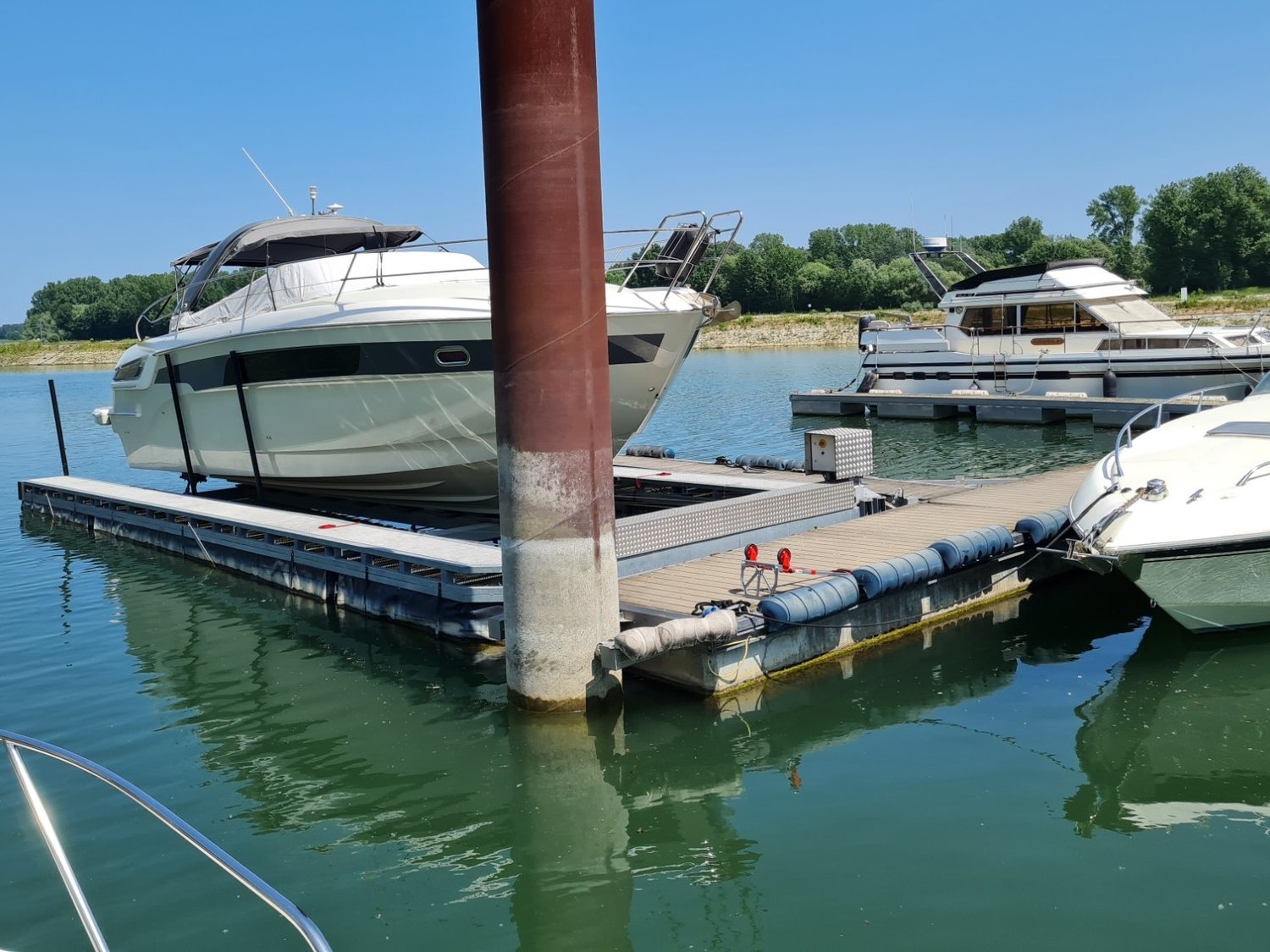
In most cruising areas the berth is the biggest item of the annual costs. The range is enormous and depends on the cruising area, boat size and marina.
Orders of magnitude (annual berth, 12–13 m):
| Cruising area | Berth / year (approx.) |
|---|---|
| Croatia (ACI and private marinas, winter afloat included) | €5,500–11,000 |
| Germany inland (Rhine, Moselle) | €1,500–3,500 |
| Lake Constance | €1,500–7,000 |
| Baltic (Flensburg, Kiel, Rügen) | €1,700–3,800 |
| Côte d’Azur / Balearics | €7,000–20,000+ |
Source: price lists of marinas and harbours for 2026, checked in October 2026.
Municipal berths in Croatia cost only a few hundred euros a year. But the law gives them only to boats that are registered in Croatia and kept mainly there, and local residents take priority. For a boat under the German flag that usually leaves the marina. The berth is a decision you should not underestimate; it affects comfort and safety. As a rule it does not pass with the boat: many harbours allocate it to one person and for a specific boat.
Lake Constance is a special case: berths are scarce and often come with waiting lists of several years. Those who have a berth do not give it up lightly, and those looking for one need patience or connections.
As a general rule: always include the berth in the overall calculation before you buy a boat. A cheap boat without a berth is no bargain.
4. Insurance: what you should know
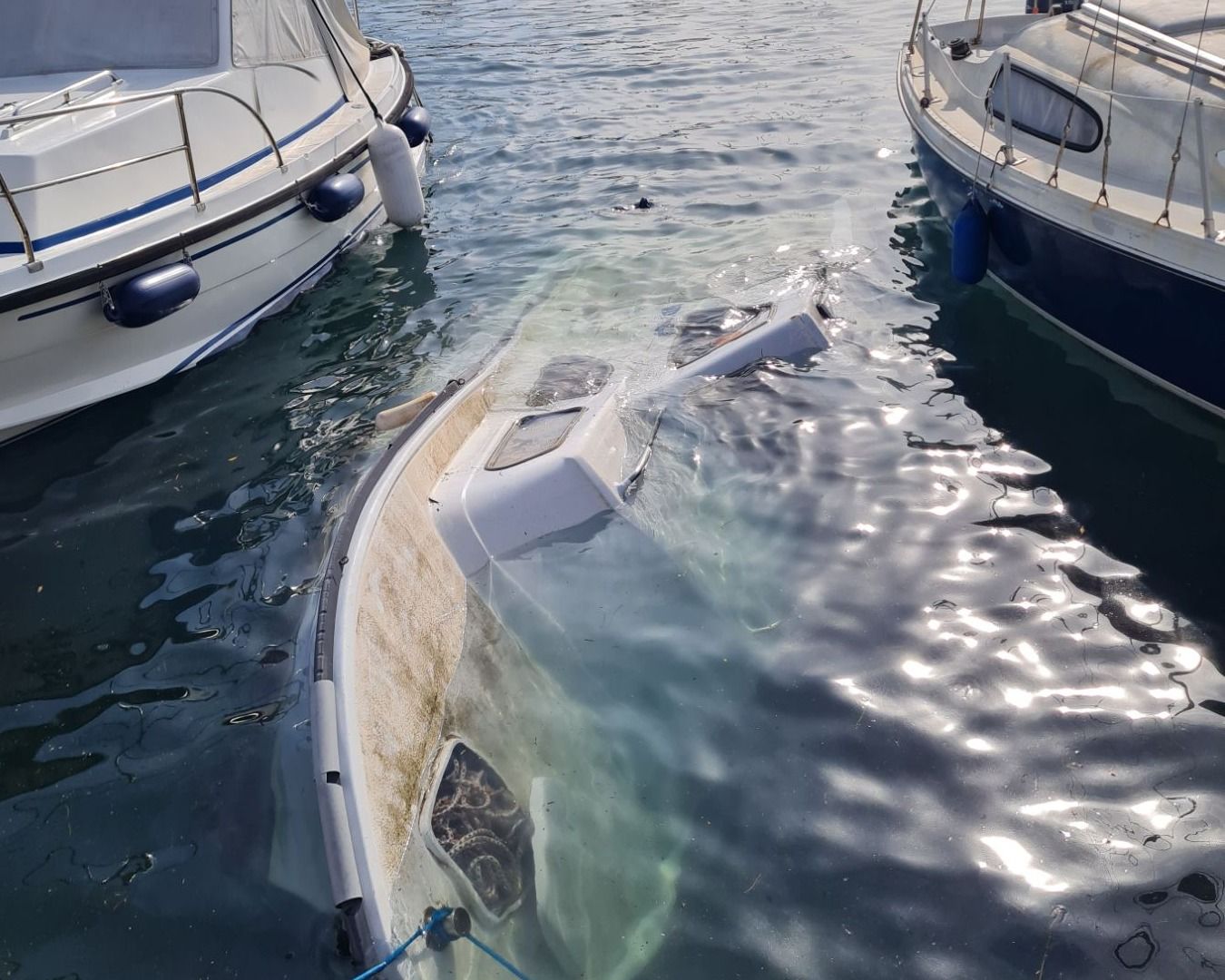
In Germany there is no statutory compulsory insurance for pleasure boats (unlike cars). Even so, insurance is not optional but a must, at least financially.
Third-party liability insurance
Covers damage to third parties (other boats, harbour facilities, people). Cost: approx. €150–400/year for boats between 7 and 17 metres. Indispensable. Many marinas require it as a condition of the berth.
Hull insurance
Covers damage to your own boat (storm, collision, theft, vandalism). Cost: typically 0.5–1.5% of the insured value a year. For a Prestige 42 (insured value approx. €230,000) that means €1,150–3,450/year. For a Bavaria Cruiser 41 (€100,000) approx. €500–1,500. The range depends on the cruising area, navigation limits and excess.
Skipper’s liability insurance
If you skipper someone else’s boat (charter, delivery), you need your own skipper’s liability insurance. The PartABoat template requires third-party liability cover that includes use by all co-owners; you check with your insurer whether you are covered as owner and skipper.
Insurance with co-ownership
With co-ownership, the boat is insured as a whole, not each share separately. The insurance costs are split among the owners in proportion to their shares. Important: the insurer must know that the boat is used by several people. Not every provider insures co-owned boats, so ask explicitly about use by several owners.
5. Maintenance, antifouling and winter storage
Maintenance is not a one-off item but a yearly rhythm. Here are the main items:
Antifouling
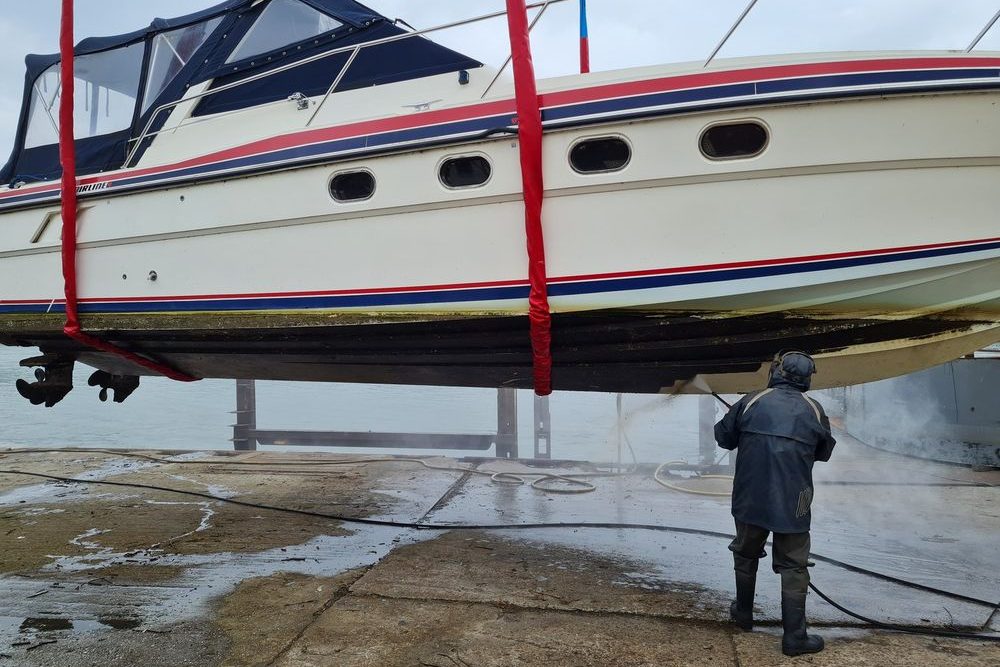
Every boat that lies in the water needs a new coat on the underwater hull each year to stop fouling. Cost: materials €250–600 (depending on boat size and product), plus labour if you do not do it yourself (€400–800). With co-ownership this is a good job to share: as two or three of you, you get the boat done in a weekend.
Engine maintenance
Oil change, impeller change, fuel filters, zinc anodes, due every year. Materials: €200–500 (motorboat) or €100–250 (sailing boat with auxiliary engine). If you do it yourself, you save the boatyard (€200–600 labour).
The drive behind the engine
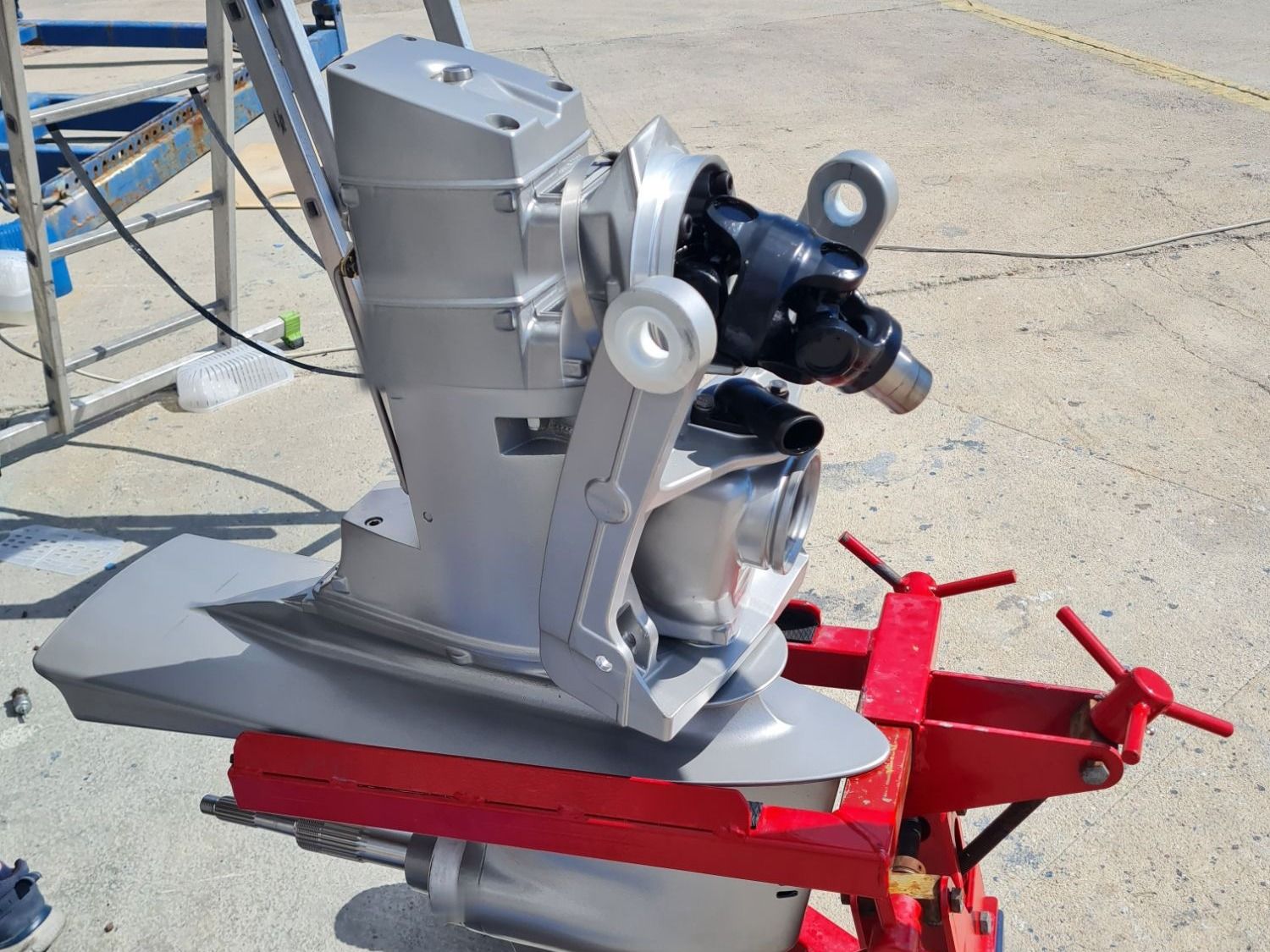
The drive is not part of engine maintenance, and on a motorboat its costs vary widely. Shaft drive, outboard, sterndrive and pod drive each come with their own maintenance intervals, and some of them have a fixed due date that comes regardless of the hours run. Which ones those are and what to ask about at the viewing is in Motorboat running costs: what drive and age really cost.
Rig check (sailing boats only)
Annual visual check of shrouds, stays, fittings and roller furling. Every 5–7 years a professional rig inspection is advisable (€500–700 depending on equipment). Replacing the standing rigging (shrouds/stays): every 10–15 years, approx. €3,000–6,000 depending on length and material.
Winter storage
In Croatia many boats spend the winter afloat (winter berth in a marina approx. €3,300–6,400 for six months and 12–13 m; with an annual berth it is included). On German inland waters boats are typically stored ashore over the winter: lifting out, storage space, covering, lifting back in in the spring, together approx. €1,200–2,200.
Other maintenance
Polishing, wood care (teak deck), checking seals, electrical check, updating safety equipment. Not everything every year, but spread over 5 years a noticeable item. Teak decks in particular need attention: cleaning and oiling once a year is the minimum, and a professional refurbishment (sanding, recaulking) costs €3,000–6,000 and is due every 8–12 years.
MOT equivalent
In Germany there is no regular compulsory inspection for pleasure boats. In other cruising areas a recurring technical inspection may be prescribed; whether it is, and how often, depends on the flag and the berth and should be clarified before buying. Where it exists, it is ultimately a good thing: it forces you to keep safety equipment up to date and not to put off basic maintenance.
6. The hidden costs: what hardly any brochure mentions
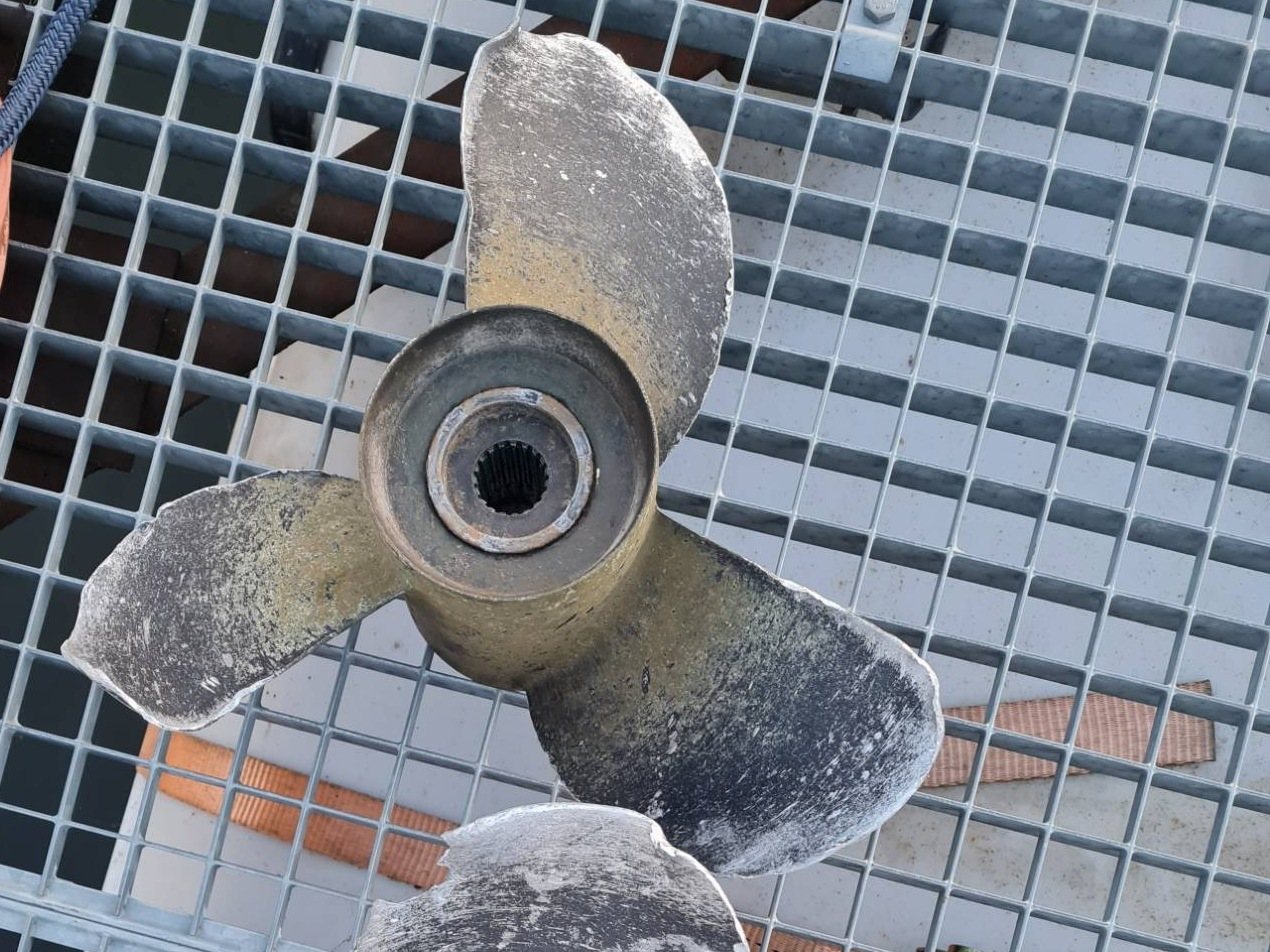
Besides the costs you can plan for, there are items that appear in no glossy brochure but that every boat owner knows:
Repairs
Something always goes wrong. An impeller that fails unexpectedly (€200). A rudder bearing bush that has to be replaced (€500–1,000 fitted). A bow thruster repair (€800–2,000). Such minor repairs are in the rule of thumb. For the big items that are not in it, you plan your own reserve of 10–15% of annual running costs; with annual costs of €19,500 that is €2,000–3,000, with a sailing yacht at €12,500 it is €1,250–1,875, some years nothing at all, some years more.
Fuel
Not included in the rule of thumb, because it varies so widely. A motorboat (Prestige 42, 2× diesel) burns approx. 40–60 litres/hour at cruising speed. At 100 engine hours a season that is 4,000–6,000 litres of diesel, at a price of approx. €1.50/litre in Croatia around €6,000–9,000. Sailing boats use considerably less (auxiliary engine: 3–6 litres/hour), but it is not zero either.
Getting there and back
If your boat is in Croatia and you live in Munich, flights, a hire car and perhaps an overnight stay come on top. At 3–5 trips a season, €1,500–3,000 soon adds up. A boat on the Rhine or Lake Constance has clear advantages here: you drive there and cast off.
Equipment and accessories
Lifejackets, distress signals, fenders, lines, tools, navigation electronics: with a new purchase you have to bring a basic set. On used boats much of it is on board, but in what condition? Budget: €500–2,000 in the first year, less after that.
Depreciation
Not a running cost, but you should know about it. Used boats typically lose 3–5% of their value a year, with well-kept boats and a stable market towards the lower end. A Bavaria Cruiser 41 (built 2015, purchase price €100,000) is realistically still worth €75,000–85,000 after 5 years. Depreciation slows with age: a 20-year-old boat in good condition hardly loses any more value, because it has a stable floor price on the market.
Fees and charges
On German federal waterways, pleasure boats no longer pay a navigation charge. It is now levied only on the Kiel Canal; state waterways and lakes can charge their own fees. In Croatia you pay the tourist tax and a vignette each year as an owner, both according to boat size; for a 50-foot boat together around €640 a year (based on experience, as of 2026). On top of that, where applicable, come visitors’ berths during trips (in Germany around €15–40 a night, in Croatian marinas around €90–200). Not dramatic individually, but noticeable in total over the season.
7. Two worked examples: motor and sail
Here is the specific annual calculation for the two PartABoat worked examples. All figures are guide values for Croatia (Adriatic).
Motorboat: Prestige 42, built 2010
| Type of cost | approx. per year |
|---|---|
| Berth (annual berth, winter berth included) | €5,500–11,000 |
| Insurance (third-party liability and hull) | €2,000–3,500 |
| Engine maintenance (2× diesel) | €800–1,200 |
| Antifouling and underwater hull | €800–1,200 |
| Other maintenance, minor repairs | €2,000–3,000 |
| Total (excluding fuel, excluding big items) | approx. €11,100–19,900 |
| Rule of thumb (€1,500 × 13 m) | approx. €19,500 |
Cost items: market research. Rule of thumb: our own experience with two motorboats.
The rule of thumb sits at the upper end of the breakdown; if you lie in an expensive marina, you come in above it.
Sailing boat: Bavaria Cruiser 41, built 2015
| Type of cost | approx. per year |
|---|---|
| Berth (annual berth, winter berth included) | €5,500–11,000 |
| Insurance (third-party liability and hull) | €800–1,500 |
| Engine maintenance (auxiliary engine) | €300–500 |
| Antifouling and underwater hull | €600–1,000 |
| Rig check and sail care | €300–700 |
| Other maintenance, minor repairs | €1,000–2,000 |
| Total (excluding fuel, excluding big items) | approx. €8,500–16,700 |
| Rule of thumb (€1,000 × 12.5 m) | approx. €12,500 |
Cost items: market research. Rule of thumb: guide values from market research.
Sailing boats cost less to run than motorboats, mainly because of cheaper insurance rates and smaller engine maintenance; they also use less fuel, which is in neither calculation. On the other hand, the rig comes as an additional maintenance item that makes itself felt every few years.
8. Costs by cruising area: Croatia, inland, western Mediterranean
Where your boat lies has a massive influence on the costs. Here is a comparison for a motorboat of 12–13 m:
| Cruising area | Running costs approx. / year | Biggest cost driver |
|---|---|---|
| Croatia (Adriatic) | €15,000–20,000 | Berth and travel |
| Germany inland (Rhine, Moselle) | €10,000–13,000 | Winter storage (lifting out, storage) |
| Baltic | €12,000–16,000 | Berth and winter storage |
| Lake Constance | €14,000–18,000 | Berth (scarce and expensive) |
| Côte d’Azur / Balearics | €25,000–40,000+ | Berth (extreme) |
Estimated ranges per cruising area, excluding fuel and big items. They apply to a whole cruising area, the breakdown in chapter 7 to a single boat with its berth; that is why the figures do not line up exactly.
For a sailing yacht, the same comparison is in Sailing yacht running costs: what rig and sails really cost.
In Croatia, travel costs come on top of the costs in the table. German inland waters are cheaper to run on, but you swap the Adriatic for the Rhine. Both have their appeal, and with co-ownership you could in theory have both: a share in Croatia and one on the Rhine.
What the table does not show: the season is shorter in Germany. On the Rhine or the Baltic you realistically go out from April to October, in Croatia from March to November, sometimes longer. That affects the cost per week of actual use: if you can use a boat for 7 months instead of 5, the fixed costs are spread over more weeks. On the other hand, Croatia means travel: a weekend trip to the boat is possible on the Rhine, not in Split.
A note on the western Mediterranean: in top locations such as Palma, an annual berth for 13 m can cost €15,000–25,000, for the berth alone, without anything else.
9. What this means for co-ownership (fractional ownership)
All the figures in this article apply to a boat as a whole. With co-ownership you bear the part of them that corresponds to your share. And this is where it gets interesting:
| Sole ownership | ¼ share (4 owners) | |
|---|---|---|
| Purchase price Prestige 42 | €230,000 | €57,500 |
| Running costs / year | approx. €19,500 | approx. €5,000 |
| Purchase price Bavaria Cruiser 41 | €100,000 | €25,000 |
| Running costs / year | approx. €12,500 | approx. €3,125 |
Purchase prices: market research. Running costs: rule of thumb from chapter 2.
So that this also works with people you did not know beforehand, it runs in a fixed order: before ownership passes, you get to know each other and set down in the Living Contract (co-owner agreement) who uses the boat when, who pays what and how someone leaves again. Your share belongs to you; it is not a membership.
€5,000 a year for a quarter share in a 13 m motorboat in Croatia. €3,125 a year for a quarter share in a 12.5 m sailing boat. At these amounts a boat of your own comes within reach, and they cannot be compared with charter, because at the end you own something.
And it makes a difference in your head: if an engine overhaul costs €4,000, as a sole owner that is €4,000 out of one pocket. As a quarter owner it is €1,000. The decision comes more easily when each person bears only their part.
And one more thing that is often missing from the cost calculation: if you have your own boat, whole or as a share, the additional charter costs do not arise; in Croatia the tourist tax and vignette remain, which you pay each year as an owner. If you charter for three weeks, you pay, on top of the bare charter price, approx. €1,450–1,650 in extra costs per booking: transit log, final cleaning, bed linen, charter excess insurance, outboard, parking. On your own boat the bed linen is in the locker, the tender hangs on the davits, and you do the final clean yourself. These costs appear in hardly any charter price comparison, and you save them on every booking.
The full calculation over 5 years, with charter alongside: For buyers
In detail: Fractional boat ownership: the complete guide
Do the sums yourself: Charter vs. share: calculator
10. Frequently asked questions
How much does a boat cost per month?
Boat ownership is better calculated in annual costs, because much of the spending comes unevenly. As sole owner of a 13 m motorboat in Croatia: approx. €19,500/year. With a ¼ share: approx. €5,000/year. A 12.5 m sailing boat in Croatia: approx. €12,500/year as sole owner, approx. €3,125/year as a quarter owner. Excluding fuel and big items.
Is €1,500/m really realistic?
For motorboats in Croatia, yes, that is a solid guide value from our own experience. In some years you come in below it, in years with a larger repair above it. The rule of thumb is deliberately somewhat cautious, so that you do not get an unpleasant surprise. For German inland waters the costs are lower (€800–1,000/m motor). For sailing boats in Croatia we calculate with approx. €1,000 per metre; this figure comes from market research, not from our own experience.
Which costs more, a motorboat or a sailing boat?
Motorboats cost more to run: more expensive insurance, more elaborate engine maintenance; on top of that comes the higher fuel consumption, which the rule of thumb does not include. Sailing boats, on the other hand, have the rig as an additional cost factor. Rule of thumb: a motorboat is approx. 50% more expensive per metre than a sailing boat in the same cruising area.
What happens with unplanned repairs?
At PartABoat, the Living Contract provides for an annual reserve for unplanned repairs. Larger spending that goes beyond day-to-day management you decide together; where that line lies, you set yourselves. A surprise bill you bear in proportion to your share, not alone.
Do the costs fall as the boat gets older?
Partly. Depreciation (and with it the insurance premium) falls. But repairs become more frequent. From a certain age (15–20 years) this evens out, and the annual costs stay relatively stable as long as the boat is well looked after. What does not stay stable are the recurring big items: they are not in the rule of thumb and fall due with age, on a sailing boat the rig and sails, on a motorboat above all the drive.
Conclusion
Owning a boat costs more than most people think, but less than most people fear, once you know the figures. The purchase price is only the beginning. The running costs decide whether boat ownership is a pleasure or becomes a burden.
If you know the calculation, you do not have to give up on a boat. You can approach it the right way: with a realistic budget, the right cruising area and, if the costs are too high for you alone, with co-owners who share them.
Co-ownership does not lower the costs. A boat costs what it costs. But your part of them becomes bearable: on a motorboat €5,000 a year instead of €19,500, on a sailing yacht €3,125 instead of €12,500. And you get out on the water more often.
View all boats Try the calculator Boat chat Sell your boat or bring co-owners on board All guides
About the author: Ekki is the founder of PartABoat and a co-owner of two motorboats, one in Croatia, the other on the Rhine. The rules of thumb for motorboats are based on his own experience with two motorboats; those for sailing boats, purchase prices, cost items and cruising-area figures on market research. All figures are guide values, not a guarantee.