
Finding co-owners: how it works
Reading time: about 14 minutes
The first question buyers and owners ask is the same: “And who are the people I would be sharing the boat with?”
There is no mistrust behind that question. It is common sense. A boat is not an office you sublet. It is something personal. What matters is who looks after it and how they treat it: how they care for it and how they handle it. That is why, at PartABoat, bringing co-owners together is not an algorithm that groups people by their profile. You are involved from start to finish.
This article explains how it works: from first interest to the moment the co-owner group is in place. With the actual process, the list of questions we use and the ways out you have at every step.
This guide was written for owners and buyers in Germany. Legal, tax and boat-paper points refer to German law and practice; other countries may differ.
1. Why the right mix of co-owners decides success or failure
“Perhaps many people simply have the same problem: they would like to share, but do not know who with.” That is what the editor-in-chief of YACHT-Digital suspects in a column from September 2026 about sailors without a boat of their own.
In a private co-ownership arrangement, it is not only about money. At least as important are the expectations nobody talks about beforehand. One wants to get out every weekend, the other only on holiday. One is meticulous about care, the other more relaxed. One wants family holidays, the other offshore trips with mates.
As long as everything runs on a handshake, nobody sees these differences until they become a problem. Getting to know each other before the purchase brings them to light. It is not about the “perfect” combination, but about expectations being on the table early, such as the others’ planned usage times, roughly by holiday periods; after getting to know each other you decide for yourselves whether to buy together.
That is how co-owner groups come about that rest on conscious decisions rather than on hope. Everyone knows beforehand what they are getting into.
2. The process: from interest to co-owner group
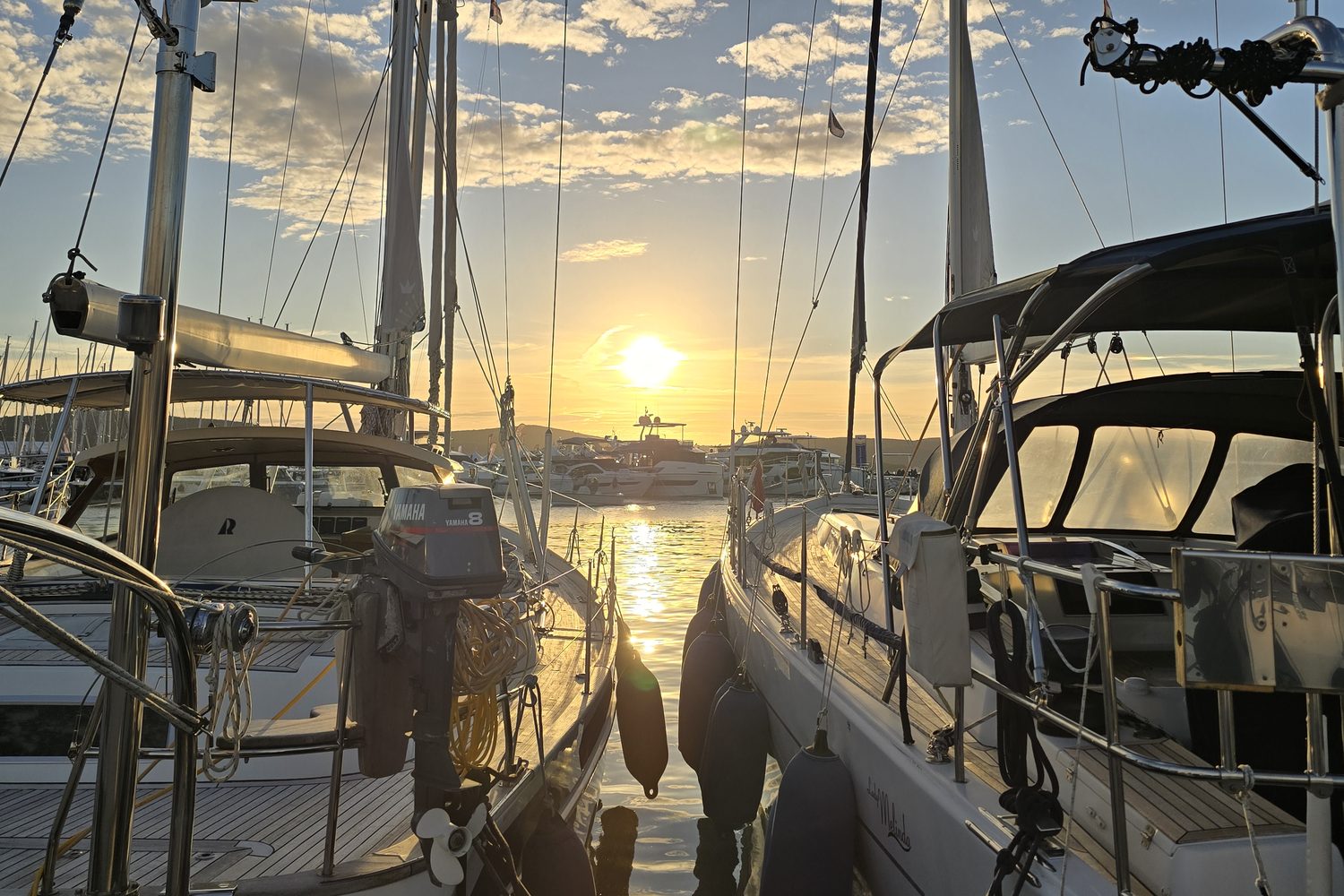
Bringing a group together is not a single moment. It takes several weeks and follows the 4 steps at PartABoat:
Step 1, Discover: non-binding interest. You register interest in a boat. You pay nothing for this and commit to nothing. PartABoat collects the enquiries for a boat; at this step the owner learns no names and no contact details. There is no contact between buyers yet.
Step 2, Check & get to know each other: viewing and pre-purchase check. You view the boat on site, do a sea trial or test sail and negotiate the price with the owner. This stage is about the boat, not the other interested parties. You check the condition, the papers and the maintenance history. PartABoat provides a Checklist for buying a boat. Duration: 4–8 weeks.
Then getting to know each other. This is the core of the process. As soon as PartABoat accompanies the purchase, it organises a meeting of all prospective co-owners, as a video call (approx. 30 minutes) or in person on site. If the owner stays on as a co-owner, they take part. PartABoat sets the framework (list of questions, topics) but does not actively moderate. By the end, everyone should know who they would be forming a co-owner group with. Until then, on request, we introduce you to other people interested in the same boat, if they would like that too; you can already use the list of questions in chapter 3.
Step 3, Secure your place. Until you accept the seller’s offer, you are not bound to anything, and until the handover you pay nothing.
After getting to know each other, each person decides individually: do I want to form a co-owner group with these people? With an existing co-owner group you decide directly to buy, with no intermediate step and no advance costs. In a whole-boat sale the following applies: only when all shares fit together and the seller has confirmed your group do you accept their offer in text form; nothing is paid at this point. The option fee, staggered by the size of the share (€750 for a quarter, €1,000 for a third, €1,500 for a half, €2,250 for three quarters, each at most 10% of the share of the purchase price), is your price for the seller committing the boat to your group alone for 45 days. You owe it to the seller only if you do not buy in the end, and you then pay it when the option period ends, directly to them and not to PartABoat. PartABoat is just starting: listing and enquiries already work. Until PartABoat accompanies the purchase, you buy directly; you then organise getting to know each other and forming the group yourselves. How to secure the purchase price is set out in the information sheet.
The option fee is a final price. Any statutory VAT and other price components are contained in it.
Step 4, Become an owner: purchase contract, payment and handover. How that works is set out under “How it works”.
So you spend money only once you have checked the boat and got to know the people. The order is deliberate, because both have to be right.
3. Getting to know each other: what is asked and why
Getting to know each other is not a casual chat. PartABoat provides a fixed list of questions. It comes from our own experience with five shared boats and covers the topics that in practice decide whether things run smoothly or grate. The questions are open, and there are no “right” answers. What counts is that everyone answers openly.
The topics in the list of questions:
- Style of use and cruising area preferences. How do you use the boat? Weekend trips, holiday trips or both? Coastal or offshore? Early season (May/June) or high season (July/August)? Alone, as a couple, with family? The answers later feed into the usage plan and show early on whether your wishes complement each other or clash.
- Standards of care and treatment of the boat. How clean does the boat have to be when you take over? How do you deal with wear? Do you always fill up when you get back? These questions sound trivial, but this is exactly what sparks frustration on shared boats, and you can settle it beforehand. Better to talk about it beforehand than about each other afterwards.
- Experience and skills. Which licences do you hold? How much experience do you have on this type of boat? Can you berth and cast off on your own? For certain cruising areas (for example Croatia, with the risk of bora) and types of boat, experience is not an optional extra but a question of safety. PartABoat does not check licences, and experience goes beyond the licence anyway.
- Family rules. Children on board? Pets? Guests? Guests alone (without an owner)? You settle these questions together in the Living Contract (co-owner agreement), and you should already agree on them beforehand.
- Financial commitment. Not your bank balance, but your attitude: how do you deal with unplanned repairs? Are you prepared to pay into a reserve? What is your limit for a single repair decision before you want a vote? Money is the topic nobody likes talking about, which is why it belongs in the list of questions.
The list of questions is not a job interview. There is no pass or fail. It ensures that everyone involved has the same topics on the table before committing financially.
4. Who suits each other, and who does not
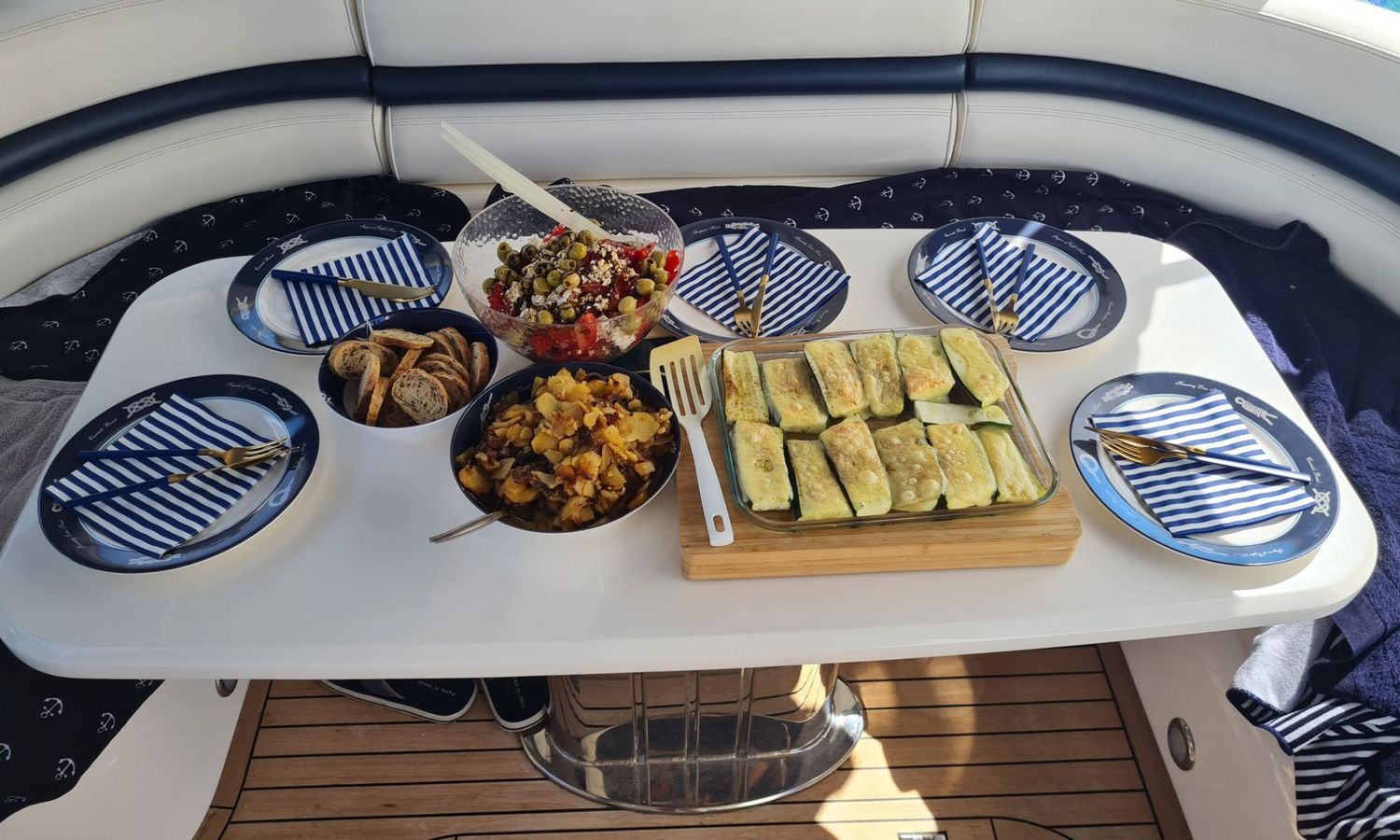
Co-owners do not have to become friends. They do not have to be alike either. What has to work is what you expect in three areas: how the boat is treated, usage times and how money is handled.
Good combination: Two families who take their holidays in high season, and a couple who prefer spring and autumn. The usage plan almost falls into place by itself. Everyone looks after the boat properly, and one has technical experience and takes on coordinating maintenance in the cruising area.
Difficult combination: An owner who treats the boat like their living room, and a co-owner who finds sand on the floor and salt water on the cushions acceptable after a trip. That has nothing to do with “right” or “wrong”; these are different standards that create friction every day.
Combination best avoided: A frequent user (20+ weeks a year) and an occasional user (4–6 weeks). The frequent user will feel they alone are causing too much wear, while the other will wonder why the boat never looks the way it did last time. At PartABoat it remains a small, fixed co-owner group of up to four co-owners, which limits the range, but within that limit the usage profiles should fit together.
The good news: whether you suit each other shows when you get to know each other. That is exactly what it is for.
5. What happens if the chemistry is not right
This is where PartABoat differs from private co-ownership arrangements. On a handshake there is no rule for leaving. At PartABoat there are two safeguards:
Before accepting the offer: stepping away free of charge. Up to step 2 (Check & get to know each other) you have spent no money (except travel costs for the viewing). If getting to know each other shows that it does not fit, you go. With no reason, no costs, no discussion. That applies to buyers and to owners who stay on as co-owners.
After the commitment (whole-boat sale only): the replacement procedure applies. The seller is bound as soon as their offer has reached you; you are bound when you accept it.
If, after the commitment, someone drops out before they have exercised their option, or exceptionally withdraws from their service agreement with PartABoat before the handover, the replacement procedure applies in two stages, together at most 23 days, even if several people drop out:
- First, those remaining can take over the free share by mutual agreement (if there are only two of you, this stage does not apply),
- then PartABoat looks for a replacement buyer, who can join only if the seller and all those remaining agree.
If that does not succeed either, the sale has failed. Nobody is forced into anything by majority vote.
The person who drops out owes the seller their option fee; that is the price for keeping the boat available for you. Anyone who has withdrawn has paid nothing before the handover; whether they owe the seller anything is governed by the law. If the replacement procedure fails as well, you owe no option fee if you have exercised your option. PartABoat asks you to do so, if you have not yet done so.
On request PartABoat continues searching afterwards; you have no entitlement to this.
The principle behind it: nobody is pushed into a co-owner group they do not want. Better an empty place than a co-owner by force.
6. Finding co-owners as an owner: your boat, your control
If, as an owner, you bring co-owners on board and keep a share yourself, you are in a special position: you know the boat best. You know how your boat sounds, where its quirks are, what works and what needs care. And you want to be sure that the new co-owners will treat it the way you do.
You are there when everyone gets to know each other. If you stay on as a co-owner, you sit at the table. You hear the candidates’ answers, ask your own questions and get a feel for whether the chemistry is right.
You have a say. If, after getting to know them, you feel a candidate does not suit your boat, things do not go further with that candidate. A brief note to PartABoat on what your concerns are based on is enough.
Right to buy if someone leaves later. If a co-owner later wants to sell their share, they notify the others; from receipt of the notice you have 30 calendar days to take over the share yourself: at the price their buyer would pay, if the notice names it, otherwise at the portion of the market value of the whole boat attributable to the share. The PartABoat template provides for a right to buy among the co-owners for this. If a successor comes along, you can reject them only for good cause relating to that person, and only within 30 calendar days of the notice; after that your consent counts as given.
More on the owner’s perspective: Share your boat instead of selling: a guide for owners
7. Three typical combinations
The following scenarios are made up, not PartABoat cases. They follow patterns that arise when a boat is owned jointly.
Scenario 1: Four buyers of shares, owner leaves
A sailing yacht, the Bavaria Cruiser 41 (built 2015, Croatia). The owner wants to sell outright. Four interested parties each buy a quarter. When they get to know each other it turns out that three are experienced sailors and one is a beginner with a newly gained licence. No problem, as long as everyone knows the beginner may need support in the first season. This is discussed openly, and one of the experienced sailors offers to sail along on the first trips. What each owner is responsible for on their own trips is set by the group in the Living Contract (co-owner agreement), but within the group people help each other.
Scenario 2: Two families and a couple
A motorboat, the Prestige 42 (built 2010, Croatia). The previous owner keeps half and sells two quarter shares. The buyers: a family with teenagers (wants July/August) and a couple without children (want May/June and September). The owner uses the boat spread across the season. The usage plan almost falls into place by itself. When they get to know each other it turns out that all three have similar standards of care: the boat is cleaned inside and out after every use, with the tank at least half full. Result: a stable co-owner group, because the usage profiles are compatible.
Scenario 3: Getting to know each other leads to a stop
A sailing boat on Lake Constance. Three interested parties, and the owner keeps a quarter. When they get to know each other it becomes clear that one of the candidates wants to hold regular parties on board: loud music, lots of guests, back late in the evening. The other two and the owner have a completely different style of use. Result: the candidate steps away, by mutual agreement, with no costs and no reproach. PartABoat looks for a replacement candidate. That is exactly what getting to know each other is for: the incompatibility shows before the contract, not after it.
8. Frequently asked questions
Can I bring my own co-owner?
Yes. If you know someone who would like to buy a share, a friend, colleague or neighbour at the pontoon, that person can respond directly to the listing. As soon as PartABoat accompanies the purchase, it still provides the template documents and accompanies the process, and the get-together takes place even if you already know each other. The contract protects both sides, even among friends.
How long does bringing a group together take?
From first interest to completing the get-together we reckon on 6–10 weeks (steps 1 and 2). That depends on how quickly enough interested parties come forward and when a viewing is possible. PartABoat does not push: thoroughness comes before speed.
Can the owner see who is interested in their boat?
At step 1 (non-binding interest) the owner learns no names and no contact details. Personal contact begins only at the viewing. When you get to know each other, everyone meets at the table.
What if not enough co-owners can be found?
If not enough interested parties come together to meet the conditions for a purchase contract, no purchase contract comes about and you pay no purchase price. So before the purchase contract nobody is stuck in an incomplete group.
Can I still say no after getting to know each other?
Yes. Until you accept the seller’s offer (step 3), you have no commitment to buy, and until the handover you pay nothing. With an existing co-owner group you have no financial risk at all before the purchase contract. In a whole-boat sale you owe an option fee only if, after accepting, you do not buy in the end; before that, stepping away is free of charge. The amounts are in chapter 2. No candidate is pushed into a co-owner group.
Does PartABoat moderate the get-together?
As soon as PartABoat accompanies the purchase, it organises the date, video call link and list of questions and sets the topics. PartABoat does not actively moderate; the conversation belongs to those taking part. The aim is an honest picture, not a coached job interview.
Conclusion
Finding co-owners is not a game of chance. It follows a clear order: first check the boat, then get to know the people, then decide. Until you accept the seller’s offer, you can stop at any step, with no reason needed and no money at risk.
This is what matters: you get to know the people before you tie up money. Not because every co-owner group has to consist of best friends, but because conscious decisions produce better co-owner groups than chance combinations.
Our experience from five shared boats so far: when expectations are on the table, co-ownership works.
View all boats Create a listing Fancy a boat chat? The whole process All guides
About the author: Ekki is the founder of PartABoat and a co-owner of two motorboats, one in Croatia and the other on the Rhine. He knows from five boats he has owned with others that the right mix of co-owners decides between joy and frustration.