
Damage to the boat: what to do now and who pays
Reading time: about 8 minutes
A dull thud at the pontoon, a jolt in the shallows, oil where there should be none: sooner or later it happens to every boat, motorboat or sailing yacht. Then two questions are on the table: What do you do now, and who pays for it?
You can rarely prevent damage. What you record afterwards is up to you.
This article shows what you do straight away and who usually pays. Ekki, the founder of PartABoat, tells of three cases of damage on his own boats. At the end comes the question everyone who wants to share a boat asks: What applies if a co-owner caused the damage?
This guide was written for owners and buyers in Germany. Legal, tax and boat-paper points refer to German law and practice; other countries may differ.
PartABoat brings together buyers and sellers of shares in used boats, as fractional co-ownership.
1. The first hour: what you do straight away
- Make people and boat safe. Is anyone hurt? Is water coming in? In an emergency, call for help by radio or phone.
- Keep the damage to a minimum. Your insurer expects that too. If oil is leaking, switch off the bilge pump so that nothing gets into the water, and tell the harbour.
- Photograph everything before anything is changed: first the whole boat with its surroundings, then the damage close up. With another boat, get its name or registration number into the picture.
- Note down what happened: date, time, place, weather, who was in charge of the boat, plus the names and contact details of everyone who was involved or saw anything.
- Report the damage to your insurer at once, even if you do not yet know whether they will pay. Which deadline and form apply is stated in your policy terms.
- Hold off on the repair until the insurer has agreed, unless it prevents something worse. Keep quotes and invoices.
After a grounding the boat needs to come out of the water, even if it seems to run normally. On a motorboat, check propeller, shaft and drive; on a sailing yacht, keel and rudder.
2. Who pays?
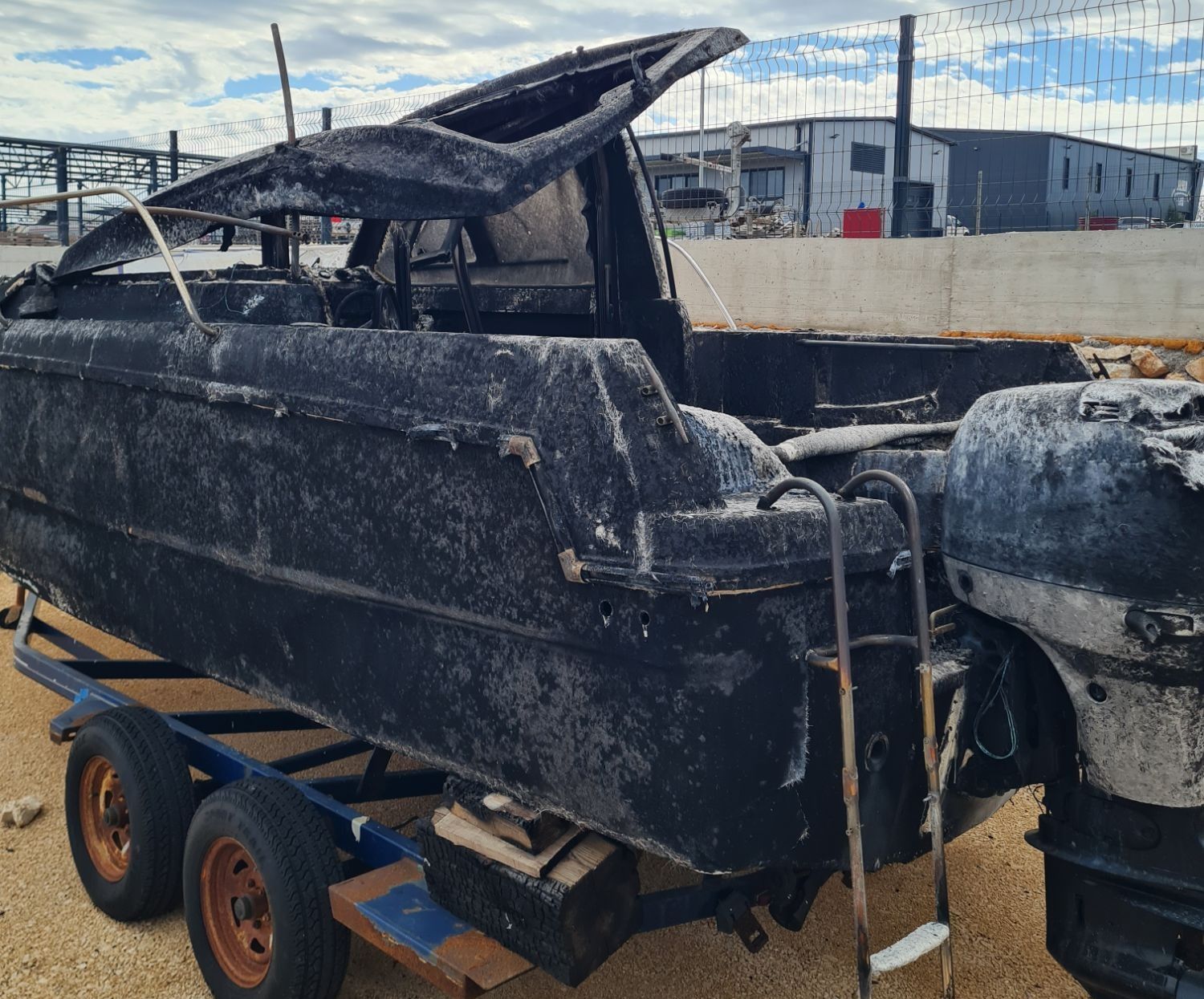
That depends on two questions: Is someone at fault for the damage, and which insurance covers it? Third-party liability insurance pays for damage you cause to others. Hull insurance pays for damage to your own boat. What exactly is covered is stated in your policy terms.
| What happened | Who usually pays |
|---|---|
| Wear and normal use | You as the owner, without insurance |
| Damage to your boat, caused by you or by nobody, such as a storm or a grounding | Your hull insurance, less the excess, depending on your policy terms |
| Someone else damaged your boat through their fault | They or their third-party liability insurance; you can also claim on your hull insurance |
| You damaged another boat or the pontoon | Your third-party liability insurance, if you are liable for it |
| A tradesman did defective work | He must put it right; depending on the case he also pays for the consequential damage |
Below the excess, you pay yourself. And not all damage has a culprit: if two boats knock together in the swell, that can simply be bad luck.
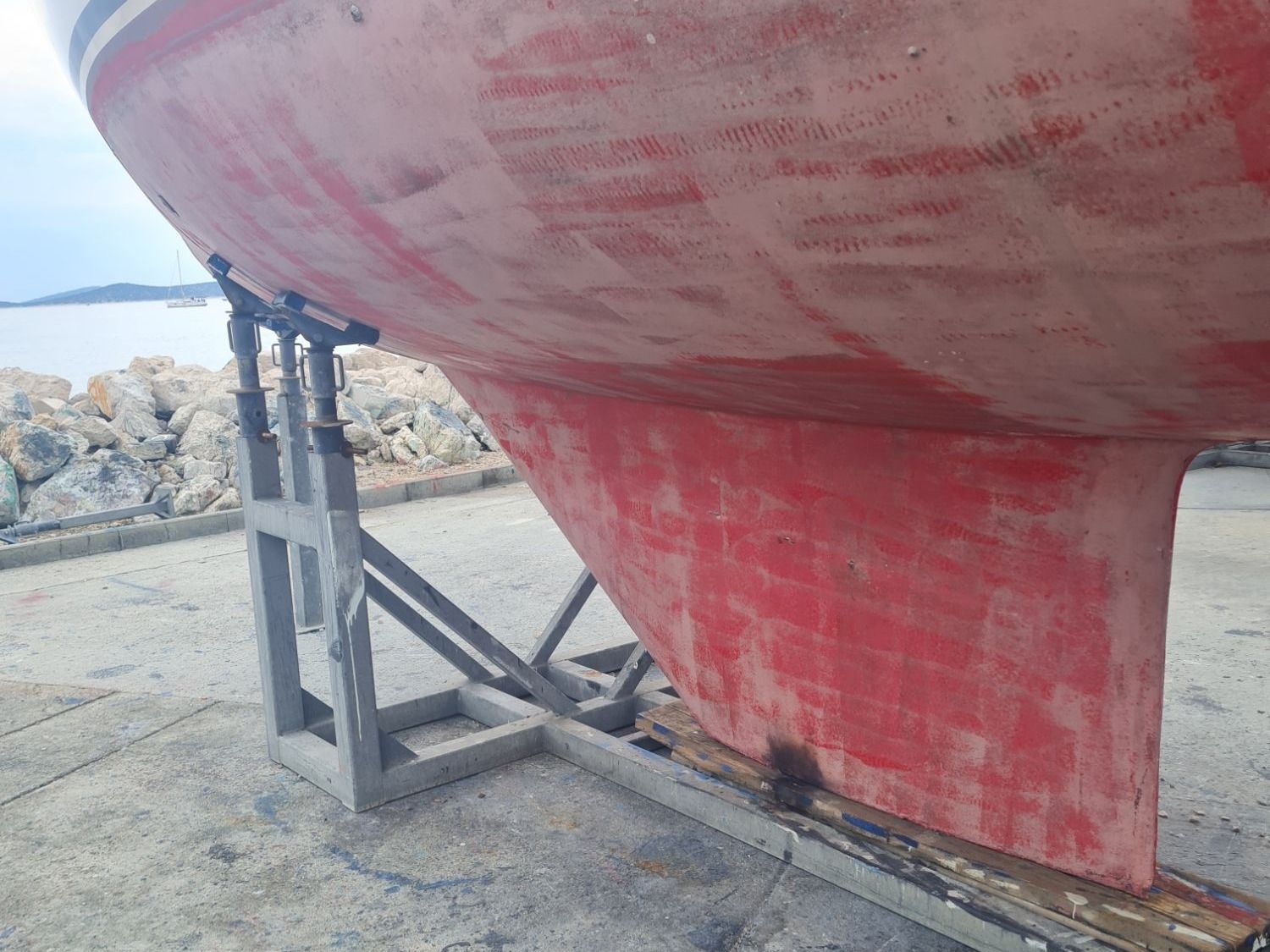
Lightning is part of this too: on a sailing yacht ashore it struck the top of the mast, ran all the way down and blew concrete out of the ground under the keel. Whether hull insurance pays is stated in your policy terms.
3. Three cases of damage from my boats
Ekki, founder of PartABoat and co-owner of two motorboats, tells the story:
The piece of GRP in Croatia
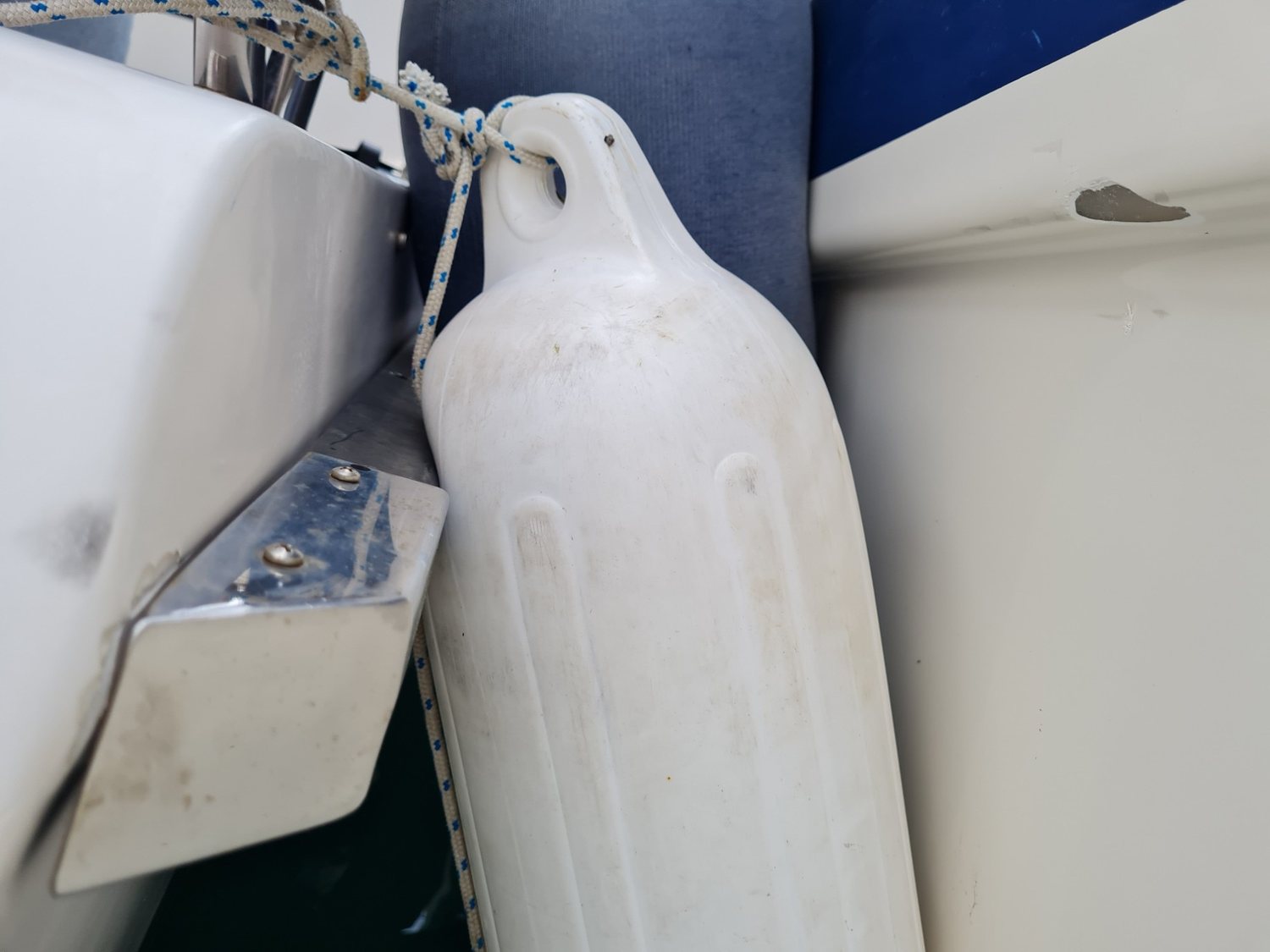
In a full harbour in Croatia a smaller boat came alongside us because there was no other space left. Later a thunderstorm brought a good deal of swell. Its stainless steel fitting sat well below our topsides, struck our hull from underneath and broke out a piece of GRP. I left the owner a note; he never got in touch. The repair cost around €300, which I bore myself.
Today I repair that sort of thing myself, and I am really no great craftsman. For damage like that in the photo I need around an hour of work:
- Find the colour. I hold the RAL K7 colour fan against the GRP. On most boats it is RAL 9010.
- Keep topcoat ready. I order topcoat in this shade and keep it to hand. 200 to 300 millilitres with hardener cost around €60, and a few grams are enough for the damage in the photo. It is a supply for later: I also use it to touch up scratches and the small holes on the foredeck when gulls or crows drop nuts to crack them.
- Build a pocket. Because topcoat runs downwards, I stick a pocket of masking tape below the damage.
- Fill. Mix according to the instructions, fill, let it cure.
- Sand and polish. After 24 hours I sand it down, first with 80-grit paper, then with 120-grit and on up to 800-grit, and polish.
It is not rocket science, and there are plenty of videos about it. Where it is hard to get at, it is a job for winter storage.
What you take from this: a note is quickly written, but it is not a contact. Photograph the other boat along with its name or registration number. If a smaller boat comes alongside you, hang the fenders where it will really strike.
Repairing it yourself is worthwhile for small chips. If the damage goes deeper into the laminate, is large or you want to claim it on insurance, ask a specialist yard or your insurer first. Wear gloves when working, make sure there is ventilation, and follow the product’s data sheet. In a co-owner group, you agree the repair with the others beforehand.
Two propellers on the Rhine
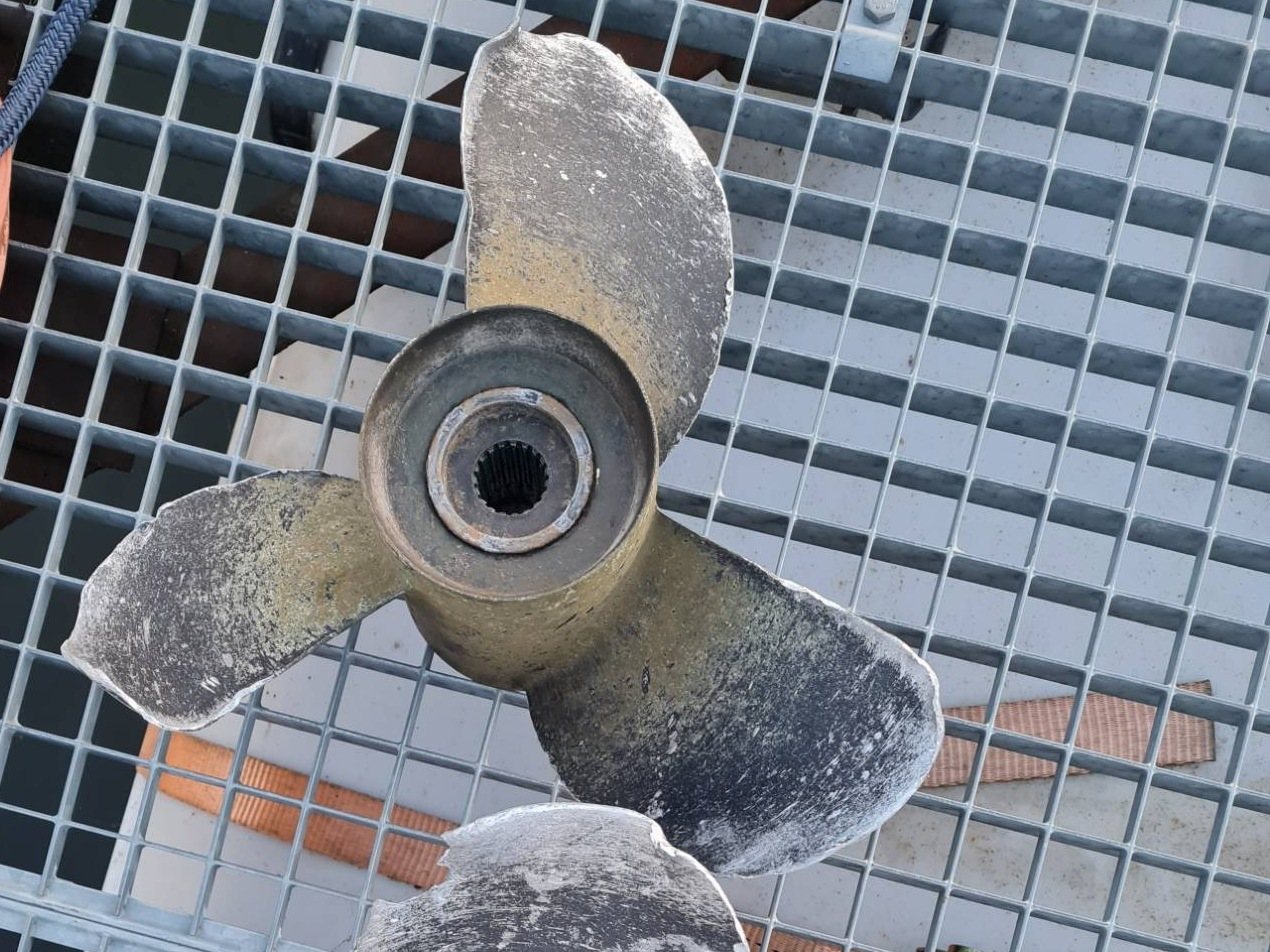
My mate, with whom I share the boat, ran aground on the Rhine and came back at walking pace. Luckily it was only the propellers, and we had got ourselves spare propellers in good time. The damaged ones could be put right for around €600. My mate paid for the repair.
What you take from this: spare propellers on board or in winter storage save you the wait in summer. And have what sits behind the propeller checked as well. What you can check on the drive yourself is in Checking a boat engine: what you can test yourself before buying.
Oil in the engine bay
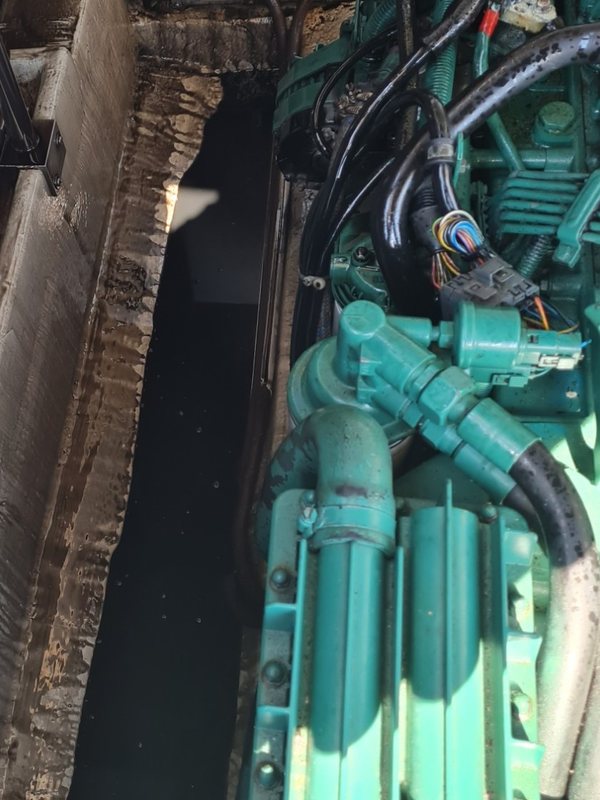 On our second outing after winter storage, in March in Croatia, we were on the plane on the open sea when a loud warning tone suddenly sounded: the oil pressure alarm. We shut down both engines at once, had to collect ourselves first and then went looking for the fault. You can see in the photo what the engine bay looked like. On one engine we chugged 1.5 hours back to the marina, where the workshop was already waiting for us. The new oil filter had not held properly. The mechanic put that down to the rubber seal of the old filter, which he said had stayed stuck to the mounting. He cleaned the engine bay, fitted a new filter and topped up the oil. We did not have to bear the costs. Still, it is no fun.
What you take from this: if the oil pressure alarm goes off, switch off the engine at once. Look into the engine bay after any work before you cast off. Report a defect first to whoever did the work, and keep the order and the invoice.
4. Damage in the co-owner group
Sharing does not change what happens to the boat. It changes who has to know and who pays. That belongs in the Living Contract (co-owner agreement), the contract that the co-owners of a co-owner group conclude among themselves. The rules here come from our template; where it sets nothing, we say: you decide that.
Logbook
After each use you keep a logbook recording engine hours, consumption, damage and anything unusual. That way the next person sees what is there, and a scratch has a date.
Insurance
The boat must be insured without interruption, at least with third-party liability and hull insurance, and the insurance must cover use by all co-owners and by the people you allow.
Who pays
You split the running costs and the reserve for maintenance and replacement by share. Anyone who culpably causes damage is liable to the others for it under the general rules. Whether you agree an excess per incident and who bears it, you decide yourselves. With us, the one who was at the helm paid; settle beforehand whether that applies to you too.
For scale: in our experience typical minor damage costs €250–750 per incident, for the whole boat, before you split it. According to market research, unplanned repairs come to €1,000–3,000 per boat per year; as a quarter owner you bear €250–750 of that per year, as a half owner €500–1,500.
If you cannot agree
First you talk to each other. If that does not help, any of you can propose conciliation by a neutral third person; the route to the courts remains open.
PartABoat is not involved when damage occurs
PartABoat is the intermediary for the purchase, is not an insurance broker and does not settle claims. When damage occurs, what counts is what you agreed beforehand.
What you settle before buying
Among yourselves:
- Who bears the excess: the one who was at the helm, or everyone by share?
- Who reports the damage, and who commissions the repair?
- Up to what amount may the contact person decide alone?
- What applies if the boat is out of action in your weeks because of damage someone else caused?
With your insurer:
- Who is insured, and who may skipper the boat?
- What applies to damage co-owners cause to each other, and to gross negligence?
- May the contract assign the excess to the person who caused the damage?
More on this in Contract for boat co-ownership: what has to be in it? and in Buying a boat together: legal basics and process, chapters 6 and 7.
Conclusion
Make people and boat safe, keep the damage to a minimum, photograph, report it at once. Who pays depends on whether someone is at fault and what your insurance covers.
A scratch annoys you just as much in a co-owner group as on your own. Only on your own, you pay for all of it.
If you share, you settle this in writing beforehand. Then nobody has to negotiate what applies while dealing with the damage.
What the contract says View boats Fancy a boat chat? All guides
Legal note: This article is not legal or insurance advice. What applies in your case depends on your contract and your insurance terms.
About the author: Ekki is the founder of PartABoat and a co-owner of two motorboats, one in Croatia and the other on the Rhine.